Yard Signs, Lockboxes, and Showing Apps: What's Standard vs. Outdated
-
 Research Team
 - 30 Aug, 2026
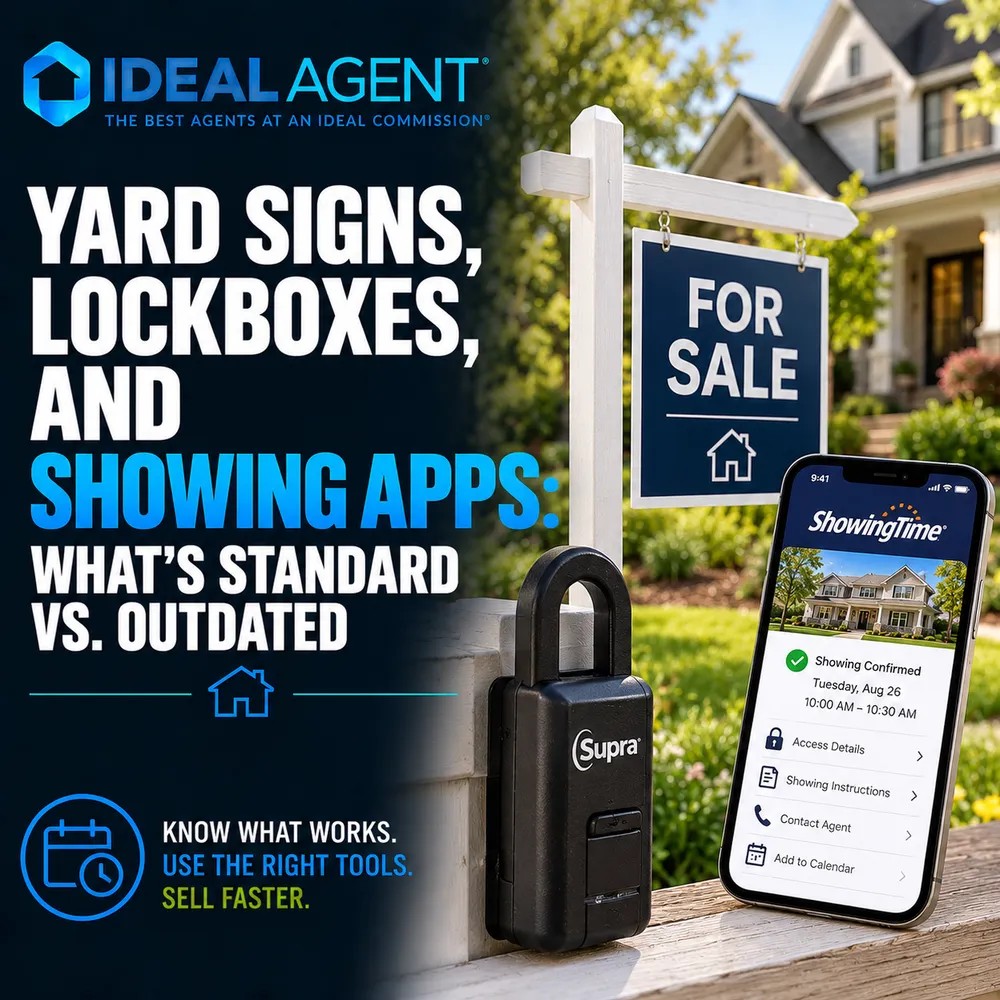
The physical and logistical side of selling a home — the sign in your yard, the lockbox on your door, how showings actually get scheduled — doesn’t get much attention compared to pricing and photos, but getting these basics wrong creates real friction that can cost you showings without you ever realizing why.
Short answer: A yard sign, a secure electronic lockbox, and an app-based showing scheduling system are all still standard practice in most markets today. What’s changed is the technology behind them — electronic, trackable lockboxes have largely replaced simple key-code boxes, and instant online scheduling has replaced phone-tag between agents. If your agent is still relying on outdated versions of these tools, it can genuinely create friction that costs you showings.
Is a Yard Sign Still Worth Having?
Yes, generally, even though most buyers find homes online first. A yard sign still serves real, practical purposes: it alerts neighbors (who often know someone looking to buy in the area) that the home is for sale, it captures interest from buyers driving through a neighborhood they’re specifically targeting, and it reinforces your online listing for anyone who’s already seen it and is now driving by to get a feel for the block. Some HOAs or municipalities have specific restrictions on yard sign size, placement, or duration, which is worth confirming before installation, but in the absence of such restrictions, there’s little downside to a standard, professional-looking sign.
What Should a Modern Lockbox Actually Look Like?
Standard practice today generally involves an electronic lockbox, not a basic mechanical key-code box. Electronic lockboxes typically require an authenticated app or credential to access, log exactly who accessed the box and when, and can be remotely managed or deactivated by your agent if needed. This provides meaningfully better security and accountability than older mechanical boxes, since you and your agent have a clear record of every access attempt — useful both for your peace of mind and, if ever needed, for addressing any concerns about unauthorized access.
Why Does Lockbox Type Actually Matter for Your Security?
A basic combination lockbox offers minimal security and no access record — anyone with the code, correct or guessed, can open it with no log of who did so or when. An electronic lockbox, by contrast, generally requires a verified real estate license credential to access, creating accountability that a simple mechanical box doesn’t provide. If your agent is still using older mechanical lockboxes as standard practice, it’s worth asking why, since electronic options have become widely available and affordable across most markets.
How Should Showings Actually Be Scheduled Today?
Standard modern practice generally uses an app-based scheduling system that lets buyer’s agents request a showing time directly, see your home’s availability in real time, and receive instant or fast confirmation — rather than relying on a string of phone calls and voicemails between agents trying to coordinate a time. This matters more than it might seem: buyer’s agents managing multiple client showings across several listings in a single day often prioritize homes that are easy and fast to schedule, meaning a clunky, slow scheduling process can genuinely cost you showing opportunities to competing listings that are simpler to book.
Does Showing Scheduling Technology Actually Affect How Many Showings You Get?
It can, meaningfully. If requesting a showing at your home requires several rounds of phone tag while a competing, similarly priced listing offers instant online booking, some buyer’s agents managing tight schedules may simply prioritize the easier option, particularly when they’re touring multiple homes for a client in a single outing. This is a subtle but real factor in your overall showing volume that’s easy to overlook, since it happens behind the scenes rather than showing up as an obvious problem.
What Access Instructions Should Be Set Up for Your Home?
Beyond the physical lockbox, your agent should establish clear instructions for showing agents — any pets to be aware of, specific entry instructions if the lockbox isn’t on the main entrance, and any home-specific quirks (an alarm system, a tricky door, a request to remove shoes) that should be communicated in advance rather than discovered awkwardly during a showing. Clear instructions reduce friction and prevent a bad first impression before a buyer even sees the inside of your home.
Should You Be Notified Every Time Your Home Is Shown?
Most modern showing systems can automatically notify you when a showing is requested and confirmed, and often when it’s completed, giving you visibility into activity without needing to constantly check with your agent. This is generally considered standard practice today and is worth confirming is set up correctly for your specific listing, particularly if you still occupy the home and need adequate notice to prepare or vacate for each showing.
Why Do These “Small” Logistics Actually Matter to Your Sale?
None of these tools directly determine your sale price the way pricing strategy or photography does, but they collectively determine how smoothly and frequently your home actually gets shown — and a home that’s hard to schedule, poorly secured, or confusing for showing agents to access can genuinely lose out on interest compared to a comparable listing with modern, frictionless logistics behind it.
IDEAL AGENT matches sellers with a top 1% local agent who uses modern, secure, and efficient showing logistics as a standard part of your listing — removing unnecessary friction between an interested buyer’s agent and getting them through your door. That agent lists your home for a firm 2% commission, well below the 2.5–3% many sellers pay with a traditional agent. The recommended buyer’s agent commission is 2%–2.5%, and if a buyer comes directly through that agent’s marketing of your home, your total commission is capped at 2% combined for both sides.
Frequently Asked Questions
Are yard signs still effective if most buyers search online first?
Yes, generally — they still capture neighborhood-driven interest and reinforce your online listing for buyers already familiar with it, even though online search remains the primary discovery method.
Is an electronic lockbox significantly more secure than a basic combination box?
Yes — electronic lockboxes generally require verified credentials to access and log every entry attempt, providing meaningfully better security and accountability than a basic mechanical box.
Does my HOA or city have rules about yard signs?
Possibly — some HOAs and municipalities have specific size, placement, or duration restrictions, so it’s worth confirming with your agent or HOA before installation.
Can I control which days or times my home is available for showings?
Yes — most modern scheduling systems let you set specific availability windows, which your agent can configure based on your preferences and needs.
Will I be notified every time someone requests a showing?
In most modern systems, yes — automatic notifications for showing requests and confirmations are generally standard practice, worth confirming is properly set up for your listing.
Does a harder-to-schedule showing process actually reduce buyer interest?
It can, particularly with buyer’s agents managing multiple showings in a single outing, who may prioritize easier-to-book listings over ones requiring extended back-and-forth scheduling.
Should I be concerned if my agent still uses a basic combination lockbox?
It’s worth asking why, given that electronic lockboxes with access logging have become widely available and offer meaningfully better security and accountability.
Getting the logistics right removes unnecessary friction between an interested buyer and your front door. Get matched with a top 1% local agent who uses modern showing tools and lists for 2% commission.