The Gap Between Top Agents and Everyone Else Is Widening. Here's Why That Should Change How You Choose One.
-
 Steve Johnston
 - 06 Aug, 2026
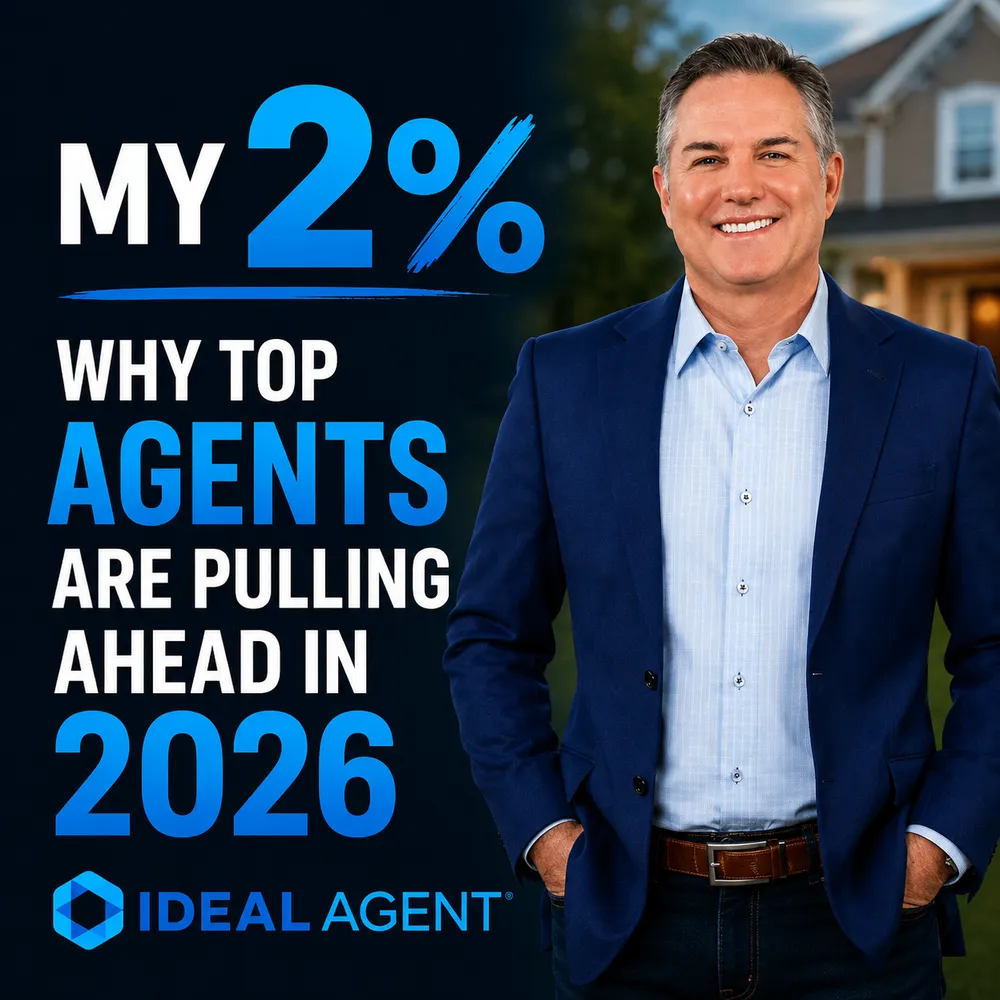
After 25 years in this business, I’ve watched the real estate industry go through plenty of cycles — rate spikes, inventory crunches, commission structure fights. But there’s a shift happening right now that doesn’t get talked about enough, and it has almost nothing to do with the market itself. It’s happening inside the agent ranks, and if you’re planning to sell, it should directly change how you pick who represents you.
Short answer: The gap between top-producing real estate agents and everyone else is widening. A shrinking group of highly systematic, well-resourced agents and teams is capturing a growing share of transactions, while a large middle tier of agents who close “enough business to get by” is quietly disappearing. For sellers, this means the difference between hiring an average agent and hiring a genuinely top-performing one is bigger than it’s ever been — and it’s worth understanding why before you list.
What’s Actually Happening in the Agent Ranks?
Real estate has always had a wide range of agent performance, but the middle of that range is thinning out. On one end, a growing number of agents and teams are treating their business like an actual company — building real databases instead of loose contact lists, investing in marketing systems and technology, and staying in consistent contact with past and prospective clients long before there’s a transaction to chase. On the other end, a large group of agents is doing just enough to stay licensed and occasionally close a deal, largely dependent on whatever leads happen to walk in the door.
The agents stuck in the middle — capable, licensed, and willing, but without a systematic way of generating consistent business — are the ones increasingly falling out of the industry entirely.
Why Does This Matter More to You as a Seller Than to the Agents Themselves?
It’s tempting to read this as an internal industry story. It isn’t. When a shrinking group of agents is doing a growing share of the business, that group develops something the disappearing middle never had the volume to build: real, current, hyper-local market knowledge, from actually being in transactions week after week — not from a class taken years ago. Sharper, more effective marketing and pricing strategy, refined over dozens or hundreds of recent deals. Stronger negotiating leverage, because other agents and title companies know their reputation and take their offers seriously. And systems that keep a transaction moving smoothly instead of stalling on paperwork, communication gaps, or missed deadlines.
An average agent, doing a handful of deals a year without much system behind them, simply doesn’t have the repetition to build these advantages — through no fault of effort or intention. It’s a volume and specialization problem, not a character problem.
What Separates the Agents Who Are Pulling Ahead?
The agents thriving in this environment generally aren’t working more hours than everyone else — they’re working differently. A few patterns show up consistently: they treat relationship-building as an ongoing discipline, not something that starts only when a lead calls. They use data and technology to stay organized and responsive, without losing the personal relationship that actually closes deals. They price and market listings based on real, current comparable data rather than a rough guess or an outdated formula. And they protect time specifically for the activities that generate future business, rather than only reacting to whatever comes in.
Agents without these habits aren’t necessarily bad at their jobs — but in a more competitive, more information-rich market, “good enough” increasingly isn’t enough to consistently deliver the strongest possible outcome for a client.
What’s the Real Cost of Hiring an Average Agent in This Environment?
This is where the industry trend becomes a very practical seller problem. An agent without a systematic pricing process is more likely to misprice your home — either too high, causing it to sit and eventually require a price cut that makes buyers wonder what’s wrong, or too low, leaving money on the table. An agent without strong, current marketing reach is less likely to get your listing in front of the full pool of qualified buyers. An agent without a disciplined follow-up and negotiation process is more likely to leave value on the table during offer negotiations, or let a transaction stall over an issue a more experienced agent would have anticipated and headed off early.
None of this shows up as an obvious red flag when you’re interviewing agents. It shows up months later, in a lower sale price, a longer time on market, or a transaction that fell apart and had to start over.
How Should This Change the Way You Choose an Agent?
Given how wide this gap has become, the agent-selection question isn’t really “do I like this person” or “what commission are they charging” in isolation — it’s “does this specific agent have the volume, systems, and current market activity to actually deliver a top-tier outcome.” That’s a much harder thing to evaluate on your own from a single listing consultation, since most agents present well in an interview regardless of their actual production and results.
This is precisely the gap IDEAL AGENT was built to close. Rather than asking you to interview and vet agents yourself, IDEAL AGENT pre-vets and matches sellers directly with a top 1% local agent — someone already operating in the tier of the industry that’s pulling ahead, not the shrinking middle. That agent lists your home for a firm 2% commission, well below the 2.5–3% many sellers pay with a traditional agent, and the recommended buyer’s agent commission is 2%–2.5%. If a buyer comes directly through that agent’s marketing of your home, your total commission is capped at 2% combined for both sides — top-tier representation, without the traditional commission cost, and without you having to guess which agent actually belongs in that top tier.
Is This Trend Likely to Continue?
Based on where the industry has been heading for several years now — more available data, more sophisticated marketing tools, and buyers who research and compare more before ever picking up the phone — there’s little reason to expect this polarization to reverse. Agents who’ve built real systems and a genuine track record are positioned to keep pulling further ahead, while agents relying on the market simply improving to bail out an inconsistent business are likely to keep struggling, regardless of where mortgage rates or inventory levels go next. For sellers, that makes the agent-selection decision even more consequential over time, not less.
What Should You Actually Do With This Information?
Don’t assume that any licensed agent, or the first friendly agent you meet, is equipped to deliver a top-tier result in today’s market. Ask direct questions about recent transaction volume, current listings, and specific pricing and marketing strategy — not just general experience or personality fit. And consider working with a service built specifically to match you with agents who’ve already demonstrated they’re in the tier of the industry that’s actually growing, rather than leaving that evaluation entirely up to a single interview.
Frequently Asked Questions
Does a higher commission rate mean I’m getting a better agent?
Not necessarily — commission rate and actual performance aren’t directly linked. A pre-negotiated lower rate with a vetted, top-performing agent can deliver stronger results than a higher traditional rate with an average one.
How can I tell if an agent is actually a top performer before I hire them?
Ask specific questions about recent transaction volume, current active listings, average days on market for their recent sales, and their specific pricing and marketing process — vague answers or reliance on general experience alone are worth probing further.
Is this trend happening in every housing market, or just certain areas?
The broad pattern — a growing gap between highly systematic top producers and a shrinking middle tier — has been observed across much of the industry nationally, though the specific competitive dynamics can vary somewhat by local market size and activity level.
Does working with a top agent cost more?
Not necessarily. IDEAL AGENT’s model specifically pre-negotiates a 2% listing commission with top 1% agents, meaning sellers don’t have to choose between paying more and getting better representation.
What makes an agent “top 1%” rather than just experienced?
Experience alone doesn’t guarantee results — top-tier agents typically combine consistent, current transaction volume with systematic pricing, marketing, and negotiation processes, verified through actual recent performance rather than years licensed alone.
Should I be worried if my current listing agent seems to be struggling?
If your home has been on the market longer than comparable local listings, has seen minimal showing activity, or your agent hasn’t proactively adjusted strategy based on market feedback, it may be worth having a direct conversation — or getting a second opinion from a different agent about your specific situation.
Choosing who represents your sale matters more than ever in a market where the gap between top performers and everyone else keeps widening. Get matched with a top 1% local agent who’s already in the tier of the industry that’s pulling ahead, listing for 2% commission.