Termite and WDO Inspections: What Sellers Need to Know Before Listing
-
 Research Team
 - 03 Sep, 2026
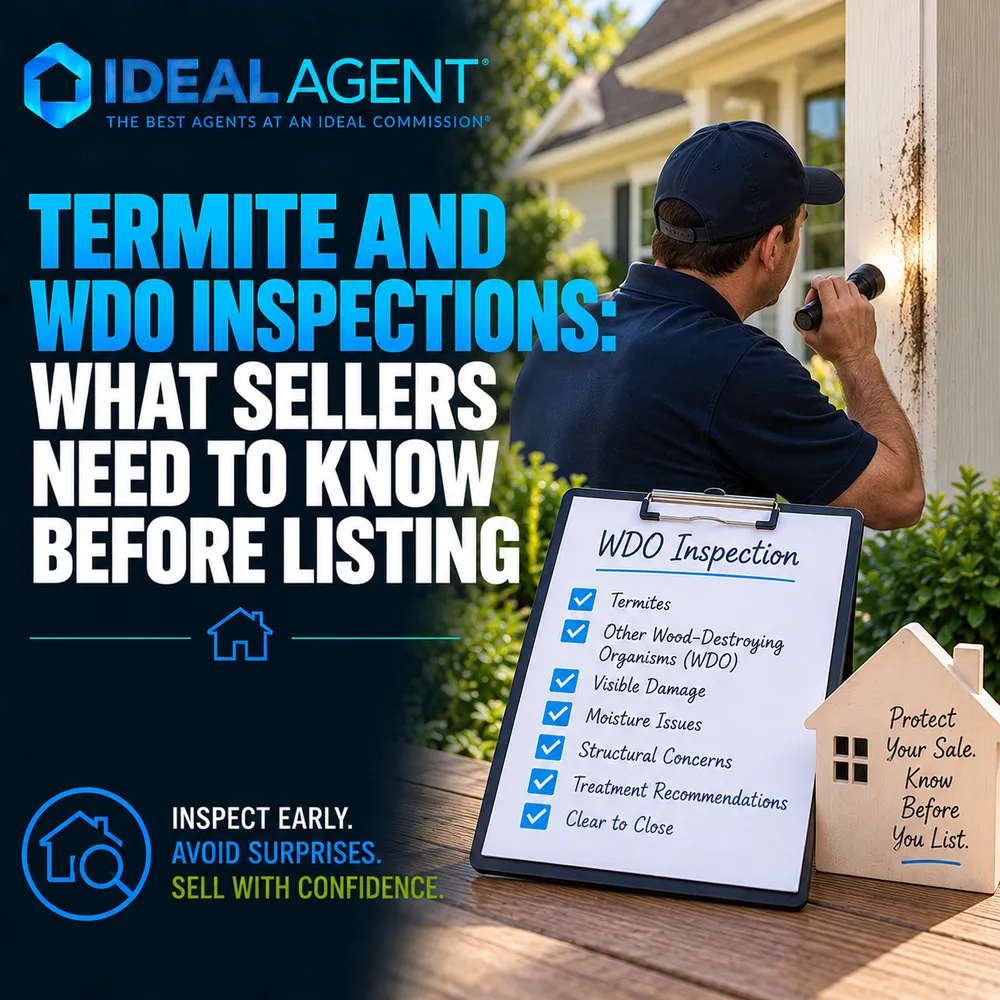
A termite inspection sounds like a minor formality until it holds up your closing — or reveals damage you had no idea existed. Understanding what this inspection actually covers, and when it’s required rather than optional, helps you prepare rather than be surprised by it mid-transaction.
Short answer: A termite inspection, often called a Wood-Destroying Organism (WDO) inspection, checks for termites, wood-boring beetles, carpenter ants, and fungal decay affecting the structural wood of a home. It’s frequently required by lenders, particularly for certain government-backed loan programs, and is common practice even when not strictly required, since undetected wood-destroying organisms can cause significant structural damage over time.
What Does a WDO Inspection Actually Check For?
Despite being commonly called a “termite inspection,” a WDO inspection typically covers a broader range of wood-destroying organisms and conditions, including termites (several species depending on your region), wood-boring beetles, carpenter ants, and fungal wood decay (dry rot or wet rot) caused by moisture issues. The inspector examines accessible areas of the structure — crawl spaces, basements, attics, exterior wood elements — looking for both active infestation and evidence of past damage.
Is a WDO Inspection Legally Required to Sell a Home?
This depends on your loan type, your state, and sometimes your specific lender. Certain government-backed loan programs, particularly VA loans, commonly require a WDO inspection as a condition of financing in many states. Some states have their own specific requirements or strong customary practice around WDO inspections regardless of loan type. Conventional financing doesn’t always require one, though many buyers and their agents request it as standard due diligence even when it’s not strictly mandated.
Who Typically Pays for the Termite Inspection?
This varies by region and is often negotiable as part of the purchase contract. In some markets, sellers customarily pay for the WDO inspection as a standard cost of selling. In others, the buyer pays as part of their due diligence costs. For VA loans specifically, there are often specific rules about who’s permitted to pay this cost, since VA guidelines have historically restricted certain fees from being charged to the veteran buyer — worth confirming with your agent if you’re selling to a buyer using VA financing.
What Happens If Active Infestation or Damage Is Found?
If a WDO inspection reveals active infestation or damage, this typically needs to be addressed — through treatment for active infestation and repair of any resulting structural damage — before financing can be finalized on loans that require a clean WDO report as a condition of approval. Depending on your contract terms, you as the seller may be responsible for treatment and repair costs, or this may become a negotiation point similar to other inspection findings, depending on what your purchase agreement specifies and local customary practice.
Should You Get a Termite Inspection Before Listing, Even If Not Required?
Many sellers find this worthwhile, particularly in regions with higher termite prevalence or older homes with more wood-to-ground contact and other conditions conducive to infestation. A pre-listing inspection lets you address any issues on your own timeline rather than under contract pressure, gives you accurate information to disclose upfront, and can prevent a surprise finding from derailing your transaction after you’re already under contract with a buyer.
How Do You Know If Your Region Has High Termite Risk?
Termite prevalence varies significantly by geography and climate, with warmer, more humid regions generally seeing higher termite activity than colder climates, though specific risk varies by termite species and local conditions. If you’re unsure of your area’s specific risk level, a local pest control company or your real estate agent can typically give you a realistic sense of how common WDO issues are in your specific market.
Does Past Termite Damage Need to Be Disclosed Even If It’s Already Repaired?
In most states, yes — similar to other property defect disclosures, past termite or wood-destroying organism issues, even if fully treated and repaired, are typically required to be disclosed to potential buyers as part of your standard disclosure obligations. Buyers generally want to know a property’s full history, not just its current condition, and this information can also help explain any visible repair work an inspector might otherwise flag as a new, unexplained finding.
What Should You Do to Reduce Termite Risk Before Listing?
Common preventive steps include eliminating wood-to-soil contact around the foundation, addressing any moisture issues that create conditions favorable to termites and fungal decay, removing woodpiles or debris near the foundation that can attract termites, and considering a preventive treatment if your region has known significant termite pressure. These steps won’t guarantee a clean inspection if an existing infestation is already present, but they reduce the likelihood of new issues developing during your listing period.
Why Does This Matter for Your Closing Timeline?
A WDO inspection finding that requires treatment and re-inspection can add real time to your closing process, particularly since some lenders require confirmation that treatment was completed and, in some cases, a subsequent clearance inspection before final loan approval. Understanding this risk early, and addressing any known issues before you’re under a tight contract timeline, helps protect your closing date from unexpected delays.
IDEAL AGENT matches sellers with a top 1% local agent who understands your local market’s WDO inspection norms and helps you prepare and disclose appropriately before you list. That agent lists your home for a firm 2% commission, well below the 2.5–3% many sellers pay with a traditional agent. The recommended buyer’s agent commission is 2%–2.5%, and if a buyer comes directly through that agent’s marketing of your home, your total commission is capped at 2% combined for both sides.
Frequently Asked Questions
Is a termite inspection the same as a general home inspection?
No — a WDO inspection specifically focuses on wood-destroying organisms and related damage, while a general home inspection covers a much broader range of the home’s systems and condition.
Do all loan types require a termite inspection?
No — requirements vary by loan type, state, and sometimes lender, with VA loans commonly requiring one in many states, while conventional financing doesn’t always mandate it, though it’s frequently requested regardless.
Who typically pays for a WDO inspection?
This varies by region and is often negotiable in the purchase contract — in some markets sellers customarily pay, in others buyers do, and VA loan rules have specific restrictions on which fees can be charged to the buyer.
What happens if termite damage is found during the buyer’s inspection?
Depending on your contract, treatment and repair costs may fall to you as the seller, or become a negotiation point similar to other inspection findings — this should be clarified in your purchase agreement.
Do I have to disclose past termite treatment even if it’s fully resolved?
Yes, generally — most states require disclosure of past wood-destroying organism issues even if treated and repaired, similar to other property defect disclosure requirements.
How long does a WDO inspection typically take?
The inspection itself is generally quick, often completed within an hour or two depending on the property’s size and accessibility, though scheduling and reporting timelines vary by provider.
Does my region’s termite risk affect whether I should get a pre-listing inspection?
Yes — higher-risk regions with more termite activity generally benefit more from proactive, pre-listing inspection, since the likelihood of an issue being present is correspondingly higher.
Addressing termite and WDO concerns before they threaten your closing timeline protects your entire transaction. Get matched with a top 1% local agent who helps you prepare for WDO requirements, listing for 2% commission.