Selling a Manufactured or Mobile Home: What's Different
-
 Research Team
 - 16 Aug, 2026
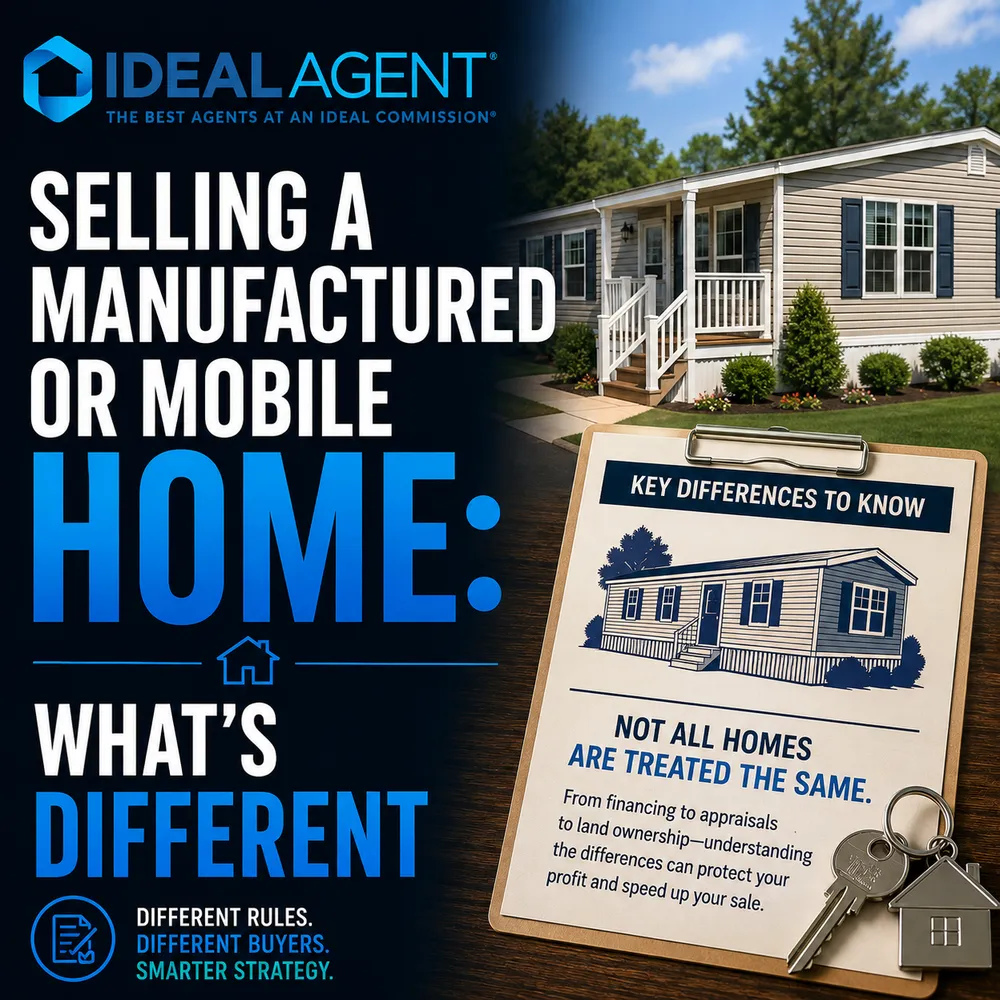
Selling a manufactured or mobile home isn’t just a smaller version of selling a traditional house — it involves a different legal classification, different financing realities for your buyer, and in many cases, an entirely different sales process depending on whether you own the land underneath it.
Short answer: The single biggest factor in selling a manufactured or mobile home is whether you own the land it sits on. If you own the land, the sale typically functions similarly to a traditional real estate transaction. If your home sits on leased land in a manufactured home community, you’re generally selling the home as personal property (similar to a vehicle title transfer) rather than real property, which changes financing options, the sales process, and who you work with to complete the transaction.
Why Does Land Ownership Change Everything?
This distinction drives nearly every other difference in how a manufactured or mobile home sale works. When you own both the home and the land it sits on, the home is generally classified as real property, meaning it’s sold and financed similarly to a traditional house, through a standard real estate transaction with a deed transfer. When you own the home but lease the land — common in manufactured home communities and mobile home parks — the home is typically classified as personal property, similar to a vehicle, and is sold through a title transfer process rather than a real estate deed, with financing options that look more like an auto loan than a mortgage.
What’s the Difference Between “Manufactured” and “Mobile” Homes?
These terms are often used interchangeably, but there’s a specific distinction: homes built after June 1976 are officially classified as “manufactured homes,” built to a federal building code (the HUD Code) established that year. Homes built before that date are generally referred to as “mobile homes” and were not subject to the same federal construction standards. This distinction can matter for financing, since some loan programs have specific age or construction-standard requirements that older mobile homes may not meet, limiting your buyer’s financing options.
How Does Land Ownership Affect Your Buyer’s Financing?
| Situation | Typical financing available to buyers |
|---|---|
| You own the home and the land | Standard mortgage financing, similar to a traditional home purchase |
| You own the home, lease the land | Personal property/chattel loans, often with higher interest rates and shorter terms than a mortgage |
| Home doesn’t meet HUD Code standards | Financing options may be significantly more limited regardless of land ownership |
Because chattel loans (personal property loans) typically carry higher interest rates and less favorable terms than traditional mortgages, this can narrow your buyer pool to those who can pay cash or qualify for this specific type of financing — worth understanding as you set expectations for your sale timeline and pricing.
Does Selling on Leased Land Require Park or Community Approval?
Often, yes. If your home sits in a manufactured home community or mobile home park, your buyer typically needs to be approved by the park or community management before they can move in and take over the lot lease — similar to how some HOAs require buyer approval for a home resale. This adds an extra step (and potential delay) to your transaction that doesn’t exist in a standard real estate sale, and it’s worth understanding your specific community’s approval process and typical timeline before you list.
How Should You Price a Manufactured or Mobile Home?
Pricing works somewhat differently depending on land ownership. If you own the land, your home’s value is generally assessed similarly to traditional real estate — based on comparable sales, condition, and location. If you’re on leased land, the home is typically valued more like a depreciating asset (similar to a vehicle) rather than an appreciating real estate asset, meaning age, condition, and remaining useful life play a larger role than they would for site-built comparable sales in the same area.
What Documentation Do You Need to Sell?
For homes on leased land, you’ll typically need the home’s title (similar to a vehicle title), any required state-specific transfer documentation, and confirmation of good standing with the park or community regarding lot rent and any community rules. For homes on owned land, you’ll generally need standard real estate closing documentation, similar to any traditional home sale, since the transaction includes both the home and the underlying real property.
Do Manufactured Homes Appreciate or Depreciate in Value?
This varies significantly based on land ownership and local market conditions. Manufactured homes on owned land, particularly in markets with rising land values, can appreciate similarly to traditional real estate, since the underlying land value often drives much of the overall appreciation. Homes on leased land more commonly depreciate over time, similar to a vehicle, since the buyer isn’t gaining any ownership interest in the land itself — only the structure. Understanding which situation applies to you is important for setting realistic expectations about your sale price relative to what you may have originally paid.
Should You List With a Real Estate Agent or a Specialized Dealer?
This depends on your specific situation. If you own the land, a traditional real estate agent experienced in manufactured housing can typically handle your sale effectively, similar to any other property listing. If you’re on leased land and selling as personal property, some sellers work with manufactured home dealers who specialize in this type of transaction, though an experienced real estate agent familiar with manufactured housing sales can often help either way, particularly with marketing and buyer qualification.
Why Does Local Experience With Manufactured Housing Matter?
Manufactured and mobile home sales involve enough differences from a standard transaction that working with someone unfamiliar with these specifics can lead to delays, financing surprises for your buyer, or pricing that doesn’t reflect how these homes actually trade in your local market.
IDEAL AGENT matches sellers of manufactured and mobile homes with a top 1% local agent who understands the specific requirements of your situation, whether you own the land or are selling on a leased lot. That agent lists your home for a firm 2% commission, well below the 2.5–3% many sellers pay with a traditional agent. The recommended buyer’s agent commission is 2%–2.5%, and if a buyer comes directly through that agent’s marketing of your home, your total commission is capped at 2% combined for both sides.
Frequently Asked Questions
Do I need a real estate agent to sell a manufactured home on leased land?
Not necessarily, since the sale is typically a personal property transaction rather than a real estate transaction — but an experienced agent can still help with marketing, pricing, and buyer qualification even in this situation.
Can a buyer get a traditional mortgage for a manufactured home on leased land?
Generally no — most traditional mortgage financing requires the buyer to own the land as well, so homes on leased land typically require personal property (chattel) financing instead.
Does my manufactured home need to meet current HUD Code standards to sell?
Older mobile homes built before the HUD Code was established aren’t required to meet those standards, but this can limit your buyer’s financing options, since some loan programs specifically require HUD Code compliance.
How long does it typically take to sell a manufactured home?
This varies based on land ownership, local demand, financing availability for potential buyers, and whether park or community approval is required — homes on leased land requiring buyer approval sometimes take longer than a standard real estate sale.
Do I need the park’s permission to sell my home if I’m on leased land?
Often yes — most manufactured home communities require buyer approval before they can move in and assume the lot lease, which adds a step to your sale timeline.
Does a manufactured home on owned land sell the same way as a traditional house?
Largely yes — if you own both the home and the land, the sale generally follows a standard real estate transaction process, including a deed transfer, similar to selling a site-built home.
Is a manufactured home a good investment that appreciates over time?
It depends heavily on land ownership and local market conditions — homes on owned land in appreciating markets can gain value, while homes on leased land more commonly depreciate over time, similar to a vehicle.
Selling a manufactured or mobile home the right way starts with an agent who actually understands the differences. Get matched with a top 1% local agent experienced in manufactured housing sales, listing for 2% commission.