Does Solar Add Value When You Sell, or Complicate the Deal?
-
 Research Team
 - 13 Aug, 2026
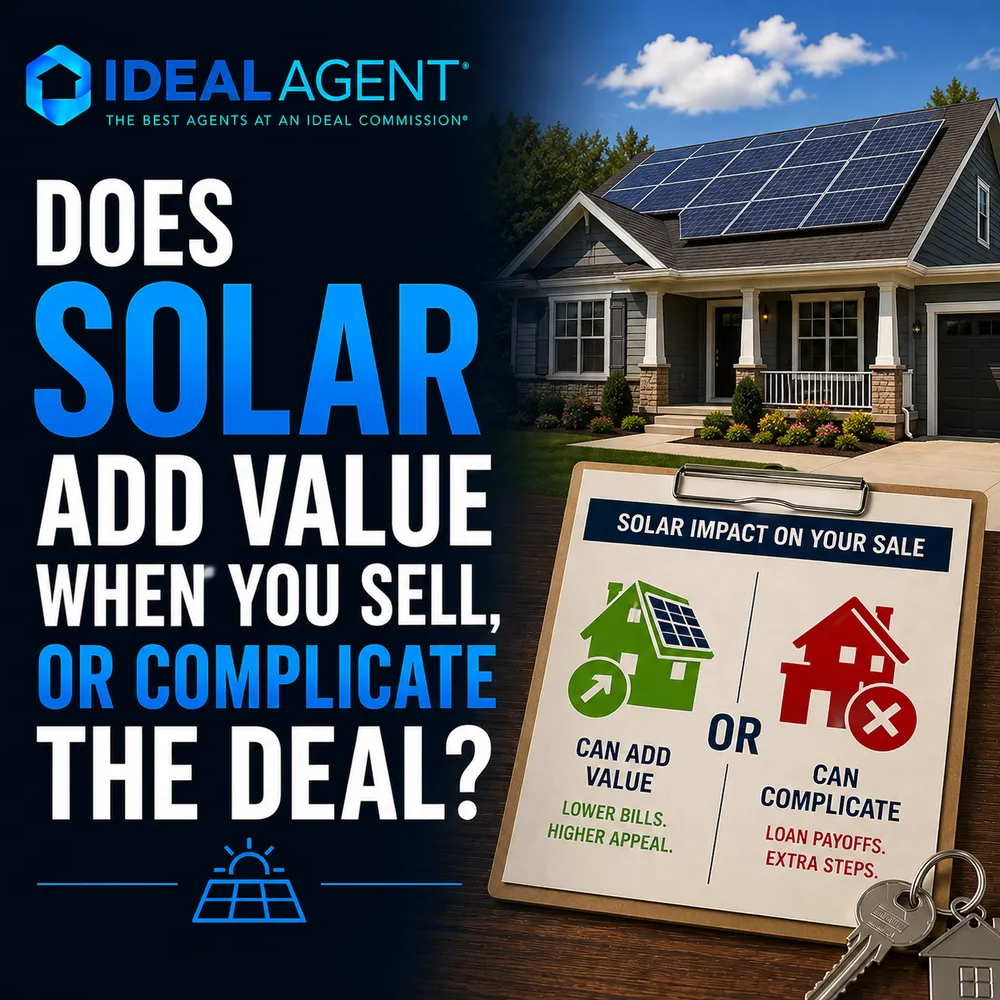
Solar panels can be one of the strongest selling points on your roof — or one of the most complicated line items in your entire transaction. The difference almost always comes down to one factor: whether you own the system outright or you’re still making payments on a lease or loan.
Short answer: Owned solar panels (paid off, with no ongoing loan or lease) generally add real value to a home sale and are one of the more straightforward positive features to market. Leased solar panels, or panels still financed through a loan, require the buyer to either qualify to take over the lease or loan, or require you to pay it off before closing — both of which can complicate and sometimes delay a sale if not planned for well in advance.
Why Does Ownership Status Matter So Much?
This is the single most important factor in how solar panels affect your sale. If you own your system outright, it’s simply part of your home — an asset that transfers with the property like any other fixture, similar to a new roof or an updated HVAC system. If you’re leasing your system or still paying off a solar loan, the panels come with an ongoing financial obligation that has to be addressed as part of the transaction, since most buyers aren’t willing or able to simply inherit someone else’s lease or loan payments without a formal transfer process.
How Do Owned Solar Panels Affect Your Sale?
When you own your system free and clear, solar panels are generally viewed as a value-adding feature, particularly in regions with high electricity costs or strong environmental buyer preferences. They can be marketed similarly to any other home improvement — highlighting reduced utility costs, system age, warranty status, and energy production history. Buyers evaluating an owned system are essentially evaluating a home upgrade, not taking on someone else’s contract.
How Do Leased Solar Panels Complicate a Sale?
If your solar panels are leased, the lease doesn’t disappear when you sell — it needs to be handled through one of a few paths. The buyer can apply to take over (assume) the lease, which typically requires a credit check and approval from the leasing company, adding a step to the transaction timeline that a standard sale doesn’t have. Alternatively, you as the seller can pay off or buy out the remaining lease value before or at closing, removing the obligation from the transaction entirely. In some cases, if neither option is arranged, the leasing company may require the panels to be removed — an added cost and complication most sellers want to avoid.
What About Solar Loans Rather Than Leases?
A solar loan is different from a lease in that you already own the system — you’re just still paying it off, similar to a home equity loan for a renovation. Depending on how the loan was structured, it may be secured against the home itself (similar to a lien) or unsecured. If it’s secured, the remaining balance generally needs to be paid off at closing, similar to how a second mortgage would be handled, which is a much more standard and manageable process than transferring a lease.
How Should You Find Out What Type of Solar Arrangement You Have?
Pull your original solar agreement and confirm exactly what you signed — a purchase agreement (you own it outright), a loan agreement (you own it, but owe a balance), or a lease or power purchase agreement (you don’t own it and are paying for the electricity it generates). If you’re not sure, contact your solar provider directly for clarification well before you plan to list, since this single distinction determines your entire strategy for handling the panels during your sale.
Should You Pay Off a Solar Loan or Lease Before Listing?
This depends on your specific numbers and timeline. Paying off the remaining balance before listing removes any complication from the transaction entirely and lets you market the panels as a clean, owned asset — often the simplest and most buyer-friendly approach if you have the funds available. If paying it off isn’t feasible, you can still sell with the obligation in place, but you’ll need to plan for either a lease transfer process or a payoff at closing from your sale proceeds, both of which should be discussed with your agent early so buyers aren’t surprised mid-transaction.
Do Solar Panels Affect Appraisal or Financing?
Owned solar systems are generally more straightforward for appraisers to account for than leased ones, since an owned system is simply part of the property. Leased systems can create more complexity for a buyer’s lender, since some loan programs have specific requirements or restrictions around properties with active solar leases, particularly regarding how the lease affects the property’s title or any liens. This is another reason clarifying your solar arrangement early — and addressing it before you’re deep into a transaction — helps avoid financing surprises for your buyer.
How Should You Market Solar Panels in Your Listing?
If you own your system, highlight it clearly: system age, average energy production or savings, warranty remaining, and any relevant certifications. If you’re leasing or financing, be upfront about it in your disclosures and have the specific lease or loan details ready to share, rather than leaving buyers to discover the obligation later in the process — transparency here builds trust and prevents a transaction from stalling over surprise information.
Why Does the Right Agent Matter for a Solar-Equipped Home?
Solar panels add a layer of transaction complexity that not every agent has direct experience navigating — particularly leased systems, which require coordination with a leasing company on a timeline that doesn’t always match a standard closing schedule. An agent who’s handled solar transactions before can flag potential issues early and keep your sale on track.
IDEAL AGENT matches sellers with a top 1% local agent who understands how to handle owned and leased solar systems, positioning your home accurately and avoiding last-minute complications. That agent lists your home for a firm 2% commission, well below the 2.5–3% many sellers pay with a traditional agent. The recommended buyer’s agent commission is 2%–2.5%, and if a buyer comes directly through that agent’s marketing of your home, your total commission is capped at 2% combined for both sides.
Frequently Asked Questions
Do I have to pay off my solar lease before I can sell my home?
Not necessarily — buyers can sometimes apply to take over the lease, though this requires their approval from the leasing company. Paying it off yourself is often the simpler path if it’s financially feasible.
How do I find out if my solar system is owned or leased?
Check your original solar agreement, or contact your solar provider directly if you’re unsure — this distinction should be confirmed well before you list your home.
Does an owned solar system definitely increase my home’s sale price?
It often adds value, particularly in markets with high electricity costs or strong buyer demand for energy efficiency, but the exact impact varies by market and shouldn’t be assumed to be a fixed dollar amount.
Can a buyer be denied approval to take over my solar lease?
Yes — lease assumption typically requires a credit check and approval from the leasing company, similar to qualifying for financing, so it’s not guaranteed for every buyer.
What happens if a buyer’s lender won’t approve a mortgage with an active solar lease?
Depending on the specific loan program and lease terms, this can require paying off the lease before closing, or in rare cases finding alternative financing — this is worth clarifying with both your agent and the buyer’s lender early in the transaction.
Do solar panels affect my homeowners insurance when selling?
Insurance implications typically transfer with standard property considerations, but it’s worth confirming with your insurer or the buyer’s insurer whether any solar-specific coverage details need to be addressed as part of the sale.
Should I disclose my solar arrangement even before a buyer asks?
Yes — proactively disclosing whether your system is owned, financed, or leased, along with the relevant details, is the most transparent approach and helps prevent the transaction from stalling over surprise information discovered later.
Solar panels can be a genuine asset in your sale — with the right guidance to handle the details correctly. Get matched with a top 1% local agent experienced with solar-equipped homes, listing for 2% commission.