Selling a House in an HOA: Fees, Approvals, and Disclosure Rules
-
 Research Team
 - 17 Aug, 2026
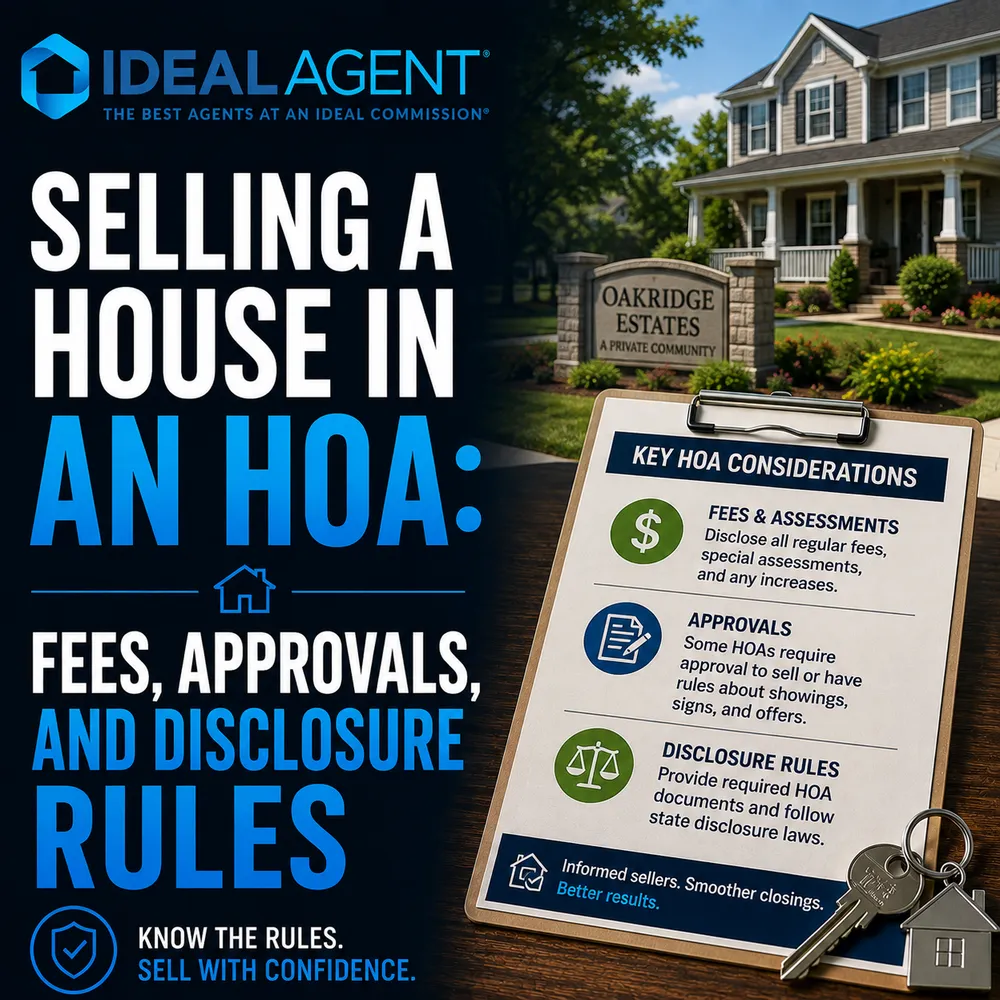
Selling a home in a homeowners association adds a layer of paperwork and process that a non-HOA sale simply doesn’t have — from mandatory disclosure documents to, in some cases, the association’s own approval before a new owner can move in. Understanding what’s actually required keeps a routine step from becoming a closing-week scramble.
Short answer: Selling a home in an HOA generally requires providing buyers with specific disclosure documents (governing documents, financial statements, and a certificate confirming your account is current), and may involve HOA fees due at closing, transfer fees, and in some communities, buyer approval before the sale can close. Requirements vary significantly by state and by your specific association, so confirming your HOA’s exact process early avoids delays later.
What Documents Do You Typically Need to Provide Buyers?
Most states require HOA sellers to provide buyers with a defined disclosure package before closing, which commonly includes the association’s governing documents (covenants, conditions, and restrictions, often called CC&Rs, along with bylaws and rules), recent financial statements or budget information showing the association’s financial health, a resale certificate or estoppel certificate confirming your dues are current and disclosing any outstanding assessments, and information about any pending litigation or major upcoming special assessments the association is aware of. Exactly which documents are legally required, and within what timeframe they must be provided, varies by state — your agent or a title company familiar with HOA sales in your area can confirm your specific requirements.
What Is a Resale Certificate or Estoppel Certificate, and Why Does It Matter?
This document, requested from your HOA (often for a fee), confirms the current status of your account — whether your dues are paid in full, whether any special assessments are pending or outstanding, and sometimes includes a summary of the association’s rules and financial standing. Buyers and their lenders often require this document before closing, since it protects them from unknowingly inheriting unpaid dues or assessments tied to the property. Ordering this early, since some associations take days or weeks to produce it, helps avoid a last-minute closing delay.
Are There Fees You’ll Need to Pay at Closing?
Often, yes. Common HOA-related closing costs for sellers include a resale certificate or document preparation fee charged by the association or its management company, a transfer fee charged when ownership changes hands, and payment of any outstanding dues or special assessments on your account before the sale can close. These fees vary significantly by association and aren’t standardized, so it’s worth requesting an estimate from your HOA or management company early in your selling timeline rather than being surprised by them at closing.
Does Your HOA Need to Approve the Buyer?
This depends entirely on your specific association’s governing documents. Some HOAs, particularly some condo associations and certain planned communities, require buyer approval before closing — reviewing the buyer’s application, sometimes including a background or credit check, before granting approval to move in. Other HOAs have no such requirement and simply need to be notified of the change in ownership. Confirming whether your specific association has an approval process, and how long it typically takes, is important early in your listing timeline, since this can add real time to your closing process if required.
What Happens If You Have Outstanding HOA Dues or Violations?
Outstanding dues generally need to be paid off before or at closing, often directly from your sale proceeds, similar to how a mortgage payoff is handled. Unresolved HOA violations — an unauthorized fence, a paint color outside approved guidelines, or similar issues — can sometimes need to be addressed or disclosed before closing, depending on your association’s specific rules and your state’s disclosure requirements. Checking your account status and violation history with your HOA before you list helps you address these issues proactively rather than having them surface during a buyer’s due diligence.
How Does an HOA Affect Buyer Interest and Financing?
Buyers respond differently to HOAs depending on their own preferences — some specifically seek out HOA communities for the amenities and maintenance consistency they provide, while others actively avoid them due to added monthly costs and rule restrictions. On the financing side, some loan programs have specific requirements around HOA financial health (reserve funding levels, litigation status, delinquency rates among owners) that can affect whether a buyer’s loan is approved — this is particularly relevant for condo purchases, where lenders often scrutinize the overall association’s financial condition, not just the individual buyer’s qualifications.
Should You Disclose Pending HOA Litigation or Major Assessments?
Yes, generally, and often this is a legal requirement, not just a best practice. If your association is involved in litigation, has a major special assessment planned, or has known deferred maintenance issues that could result in future assessments, this information typically needs to be disclosed to potential buyers as part of your state’s disclosure requirements. Failing to disclose known issues here carries similar legal risk to failing to disclose a property defect — buyers who discover undisclosed HOA problems after closing can pursue legal action in some circumstances.
How Should You Prepare for an HOA Sale Before You List?
Request your resale or estoppel certificate early, since production timelines vary by association. Confirm whether your HOA requires buyer approval and how long that process typically takes. Resolve any outstanding dues or known violations proactively where possible. And ask your HOA or management company for a complete accounting of any transfer fees or closing costs you’ll be responsible for, so there are no surprises on your closing statement.
Why Does Experience With HOA Sales Matter for Your Agent?
An agent unfamiliar with HOA transactions can miss disclosure requirements, underestimate timeline impacts from buyer approval processes, or fail to anticipate financing complications tied to the association’s financial health — all of which can delay or jeopardize your closing.
IDEAL AGENT matches sellers in HOA communities with a top 1% local agent experienced in navigating association disclosure requirements, approval processes, and closing logistics specific to your community. That agent lists your home for a firm 2% commission, well below the 2.5–3% many sellers pay with a traditional agent. The recommended buyer’s agent commission is 2%–2.5%, and if a buyer comes directly through that agent’s marketing of your home, your total commission is capped at 2% combined for both sides.
Frequently Asked Questions
How much does an HOA resale certificate typically cost?
This varies by association and management company, ranging from a modest fee to a few hundred dollars in some cases — ask your HOA directly for their current fee schedule.
How long does it take to get a resale certificate from my HOA?
This varies significantly by association, from a few days to a few weeks in some cases — ordering it early in your listing process helps avoid closing delays.
Do all HOAs require buyer approval before a sale can close?
No — this depends entirely on your specific association’s governing documents. Some require formal buyer approval; many others simply require notification of the ownership change.
What happens if I have unpaid HOA dues when I sell?
Outstanding dues typically need to be paid before or at closing, often deducted directly from your sale proceeds, similar to how a mortgage payoff is handled.
Do I have to disclose HOA litigation to potential buyers?
In most states, yes — known pending litigation involving your association is typically required disclosure, since it can affect the buyer’s decision and their lender’s financing approval.
Can HOA issues affect my buyer’s ability to get a mortgage?
Yes, particularly for condos — some lenders evaluate the overall financial health of the association, including reserve funding and delinquency rates among owners, as part of approving an individual buyer’s loan.
Should I resolve HOA violations before listing my home?
Generally yes, where possible — unresolved violations can complicate disclosure requirements and may need to be addressed before or during the sale process regardless, so handling them proactively is usually the smoother path.
Navigating HOA requirements smoothly starts with an agent who’s handled it before. Get matched with a top 1% local agent experienced in HOA and association sales, listing for 2% commission.