Rent-Back Agreements: How to Stay in Your Home After Closing
-
 Research Team
 - 26 Sep, 2026
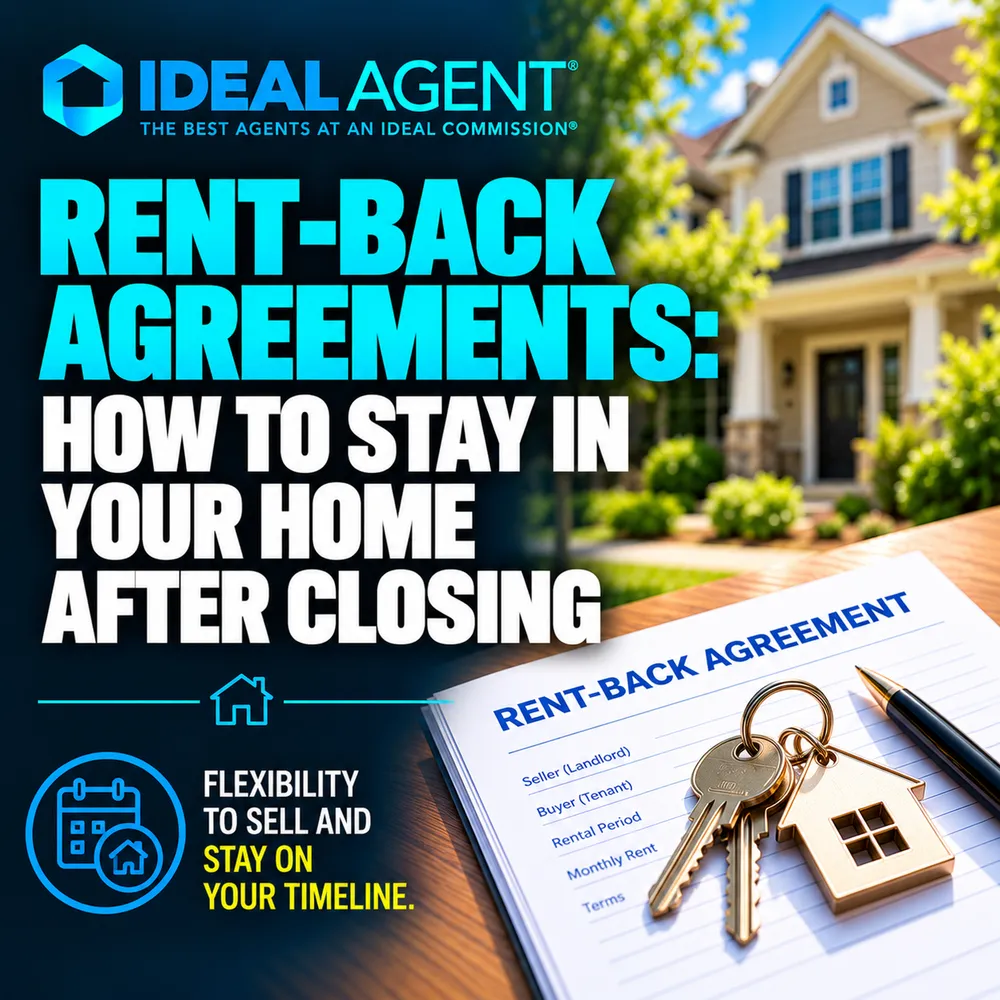
Selling your home doesn’t always mean you’re ready to move out the same day escrow closes. A rent-back agreement solves exactly this problem — letting you access your sale proceeds while buying yourself real time to finalize your next move, without the cost of a bridge loan.
Short answer: A rent-back agreement (also called a sale-leaseback) lets you remain in your home for a set period after closing, paying rent to the new owner, who now technically owns the property. It’s a common, straightforward solution for sellers who need extra time to close on or move into their next home, and it’s typically negotiated as part of the original purchase contract rather than arranged separately afterward.
How Does a Rent-Back Agreement Actually Work?
Once your home sale closes, ownership transfers to the buyer as normal — but instead of moving out immediately, you stay in the home as a tenant, paying rent to your buyer (now your landlord) for an agreed-upon period, commonly anywhere from a few days to a few months. The specific terms — daily or monthly rent amount, move-out date, and responsibilities during the rent-back period — are typically negotiated and documented as part of the original purchase agreement, not figured out after the fact.
Why Would a Buyer Agree to This Arrangement?
Buyers agree to rent-back arrangements for several reasons: it can make their offer more attractive to a seller who needs flexibility, they may not need to move in immediately themselves (particularly investors or buyers relocating from another area), or they may simply be willing to accommodate a short delay in exchange for winning the deal in a competitive situation. In many markets, offering flexibility on move-out timing is a real point of leverage sellers can use when evaluating competing offers.
How Is Rent Typically Calculated for a Rent-Back Period?
Rent is commonly calculated based on the buyer’s estimated daily housing costs — their new mortgage payment, taxes, insurance, and sometimes HOA fees — divided into a daily or monthly rate. Some agreements set a modest flat rate instead, particularly for very short rent-back periods of just a few days. The specific approach should be spelled out clearly in the agreement rather than left to informal understanding.
What Should Be Included in a Rent-Back Agreement?
A well-structured rent-back agreement should specify the exact rent amount and payment schedule, the firm move-out date and any consequences for staying past that date, who’s responsible for utilities, maintenance, and any damage during the rent-back period, whether a security deposit is required, and insurance considerations — since your standard homeowners policy typically doesn’t apply once you’re renting rather than owning the property.
Does a Rent-Back Agreement Solve the Same Problem as a Bridge Loan?
It addresses a similar underlying issue — the timing gap between selling and your next move — but through a different mechanism. A bridge loan lets you buy before you sell, using borrowed funds against your current equity. A rent-back agreement lets you sell first, access your actual sale proceeds, and simply delay your physical move-out, avoiding bridge financing costs and qualification requirements entirely. For sellers who don’t need to buy immediately, a rent-back is often a simpler, lower-cost solution than a bridge loan.
Are There Insurance and Liability Considerations to Address?
Yes — since you no longer own the home during the rent-back period, your homeowners insurance policy typically doesn’t continue to cover you as an owner-occupant. Renters insurance is generally recommended during this period, and the buyer (now the property owner) should maintain their own homeowners policy covering the structure itself. Clarifying this in writing prevents a coverage gap if something unexpected happens during the rent-back period.
How Long Can a Rent-Back Period Typically Last?
There’s no universal limit, and terms vary based on what both parties negotiate and agree to — some rent-back periods run just a few days to accommodate a short gap, while others extend to a few months for sellers who need more substantial time to finalize their next home. Extended rent-back periods sometimes face additional scrutiny from the buyer’s lender, particularly for certain loan types with occupancy requirements, so confirm any lender-related restrictions before assuming an extended timeline is automatically available.
How Should You Negotiate a Rent-Back Agreement Into Your Sale?
This is best addressed proactively, before you accept an offer, rather than requested as an afterthought once you’re already under contract. An experienced agent can help you determine how much rent-back flexibility to request, how to present that request in a way that doesn’t weaken your offer’s overall appeal to buyers, and how to structure the terms clearly enough to avoid disputes later.
IDEAL AGENT matches sellers with a top 1% local agent who knows how to negotiate rent-back terms effectively as part of your overall sale strategy — giving you the timing flexibility you need without resorting to costly bridge financing. That agent lists your home for a firm 2% commission, well below the 2.5–3% many sellers pay with a traditional agent. The recommended buyer’s agent commission is 2%–2.5%, and if a buyer comes directly through that agent’s marketing of your home, your total commission is capped at 2% combined for both sides.
Frequently Asked Questions
Is a rent-back agreement the same as a lease?
Functionally similar, yes — you’re renting the property from its new owner, typically under simpler, shorter-term terms than a standard residential lease, though the agreement should still be documented clearly in writing.
Do I need renters insurance during a rent-back period?
Yes, generally — your homeowners insurance typically doesn’t cover you once you no longer own the property, so separate renters insurance is usually recommended.
Can a buyer refuse to offer a rent-back agreement?
Yes — a rent-back is a negotiated term, not a guaranteed right, so buyers can decline to include one, which is why it’s worth discussing and requesting as part of your offer strategy from the start.
How is rent-back pricing typically determined?
Rent is commonly based on the buyer’s estimated daily housing costs, though flat rates are sometimes used, particularly for very short rent-back periods.
What happens if I don’t move out by the agreed date?
Consequences should be specified in the agreement itself — commonly a daily penalty fee — since without clear terms, an overstay can create a genuine legal dispute between you and your buyer.
Does a rent-back agreement affect the buyer’s mortgage approval?
It can, particularly for certain loan types with owner-occupancy requirements, so it’s worth confirming with the buyer’s lender whether an extended rent-back period creates any complications.
Is a rent-back agreement a good alternative to a bridge loan?
Often yes, for sellers who don’t need to buy their next home immediately — it avoids financing costs and qualification hurdles, using your actual sale proceeds instead of borrowed funds.
Negotiating the right timing flexibility into your sale can eliminate the need for costly bridge financing altogether. Get matched with a top 1% local agent who structures rent-back terms strategically and lists for 2% commission.