How to Sell a Vacant House Without It Looking (or Feeling) Empty
-
 Research Team
 - 18 Aug, 2026
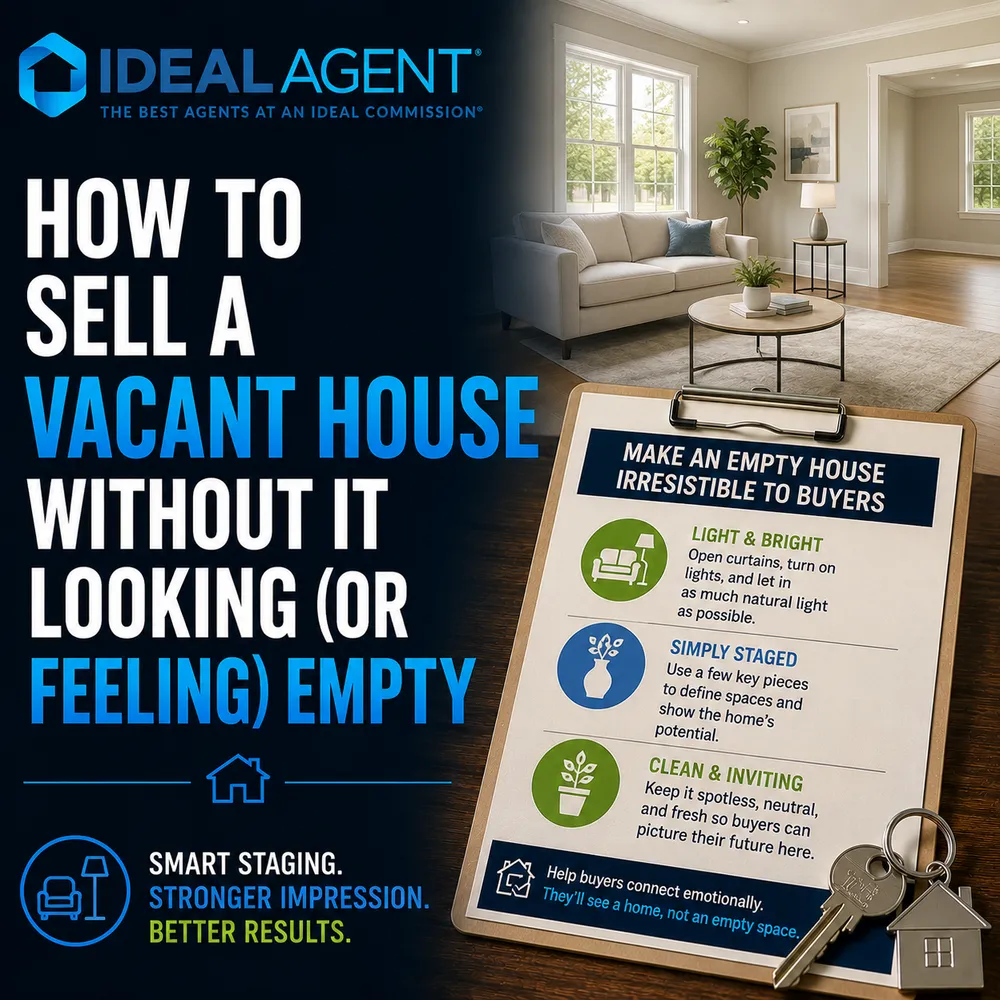
An empty house doesn’t just look different to buyers — it performs differently in the market. Vacant listings frequently take longer to sell and can sell for less than comparable furnished homes, simply because buyers struggle to picture themselves living somewhere that feels more like a warehouse than a home.
Short answer: Vacant homes can sell successfully, but they generally benefit significantly from professional staging (physical or virtual), enhanced security precautions, and extra attention to maintenance, since an empty house shows every flaw more starkly and lacks the emotional connection that helps buyers commit. Sellers of vacant homes should also plan for practical considerations like insurance, utilities, and regular upkeep during the listing period.
Why Do Vacant Homes Often Sell Slower or for Less?
Empty rooms are harder for most buyers to mentally furnish, which makes it more difficult for them to picture their own life in the space — a critical part of the emotional decision-making that drives most home purchases. Vacant homes also tend to visually emphasize flaws that furniture and decor would normally soften: scuffed walls, worn flooring, or awkward room proportions all stand out more starkly in an empty room than a staged one. And without furniture to establish scale, buyers sometimes misjudge room sizes, occasionally perceiving rooms as smaller than they actually are.
Should You Stage a Vacant Home Before Listing?
In most cases, yes — staging is one of the most consistently effective tools for improving how a vacant home performs on the market. Professional staging (bringing in furniture and decor, either for the whole home or key rooms) helps buyers visualize the space as a home rather than an empty shell, and tends to photograph significantly better for online listings, where most buyers form their first impression. If full staging isn’t in the budget, partial staging of key rooms — typically the living room, primary bedroom, and kitchen — can still meaningfully improve buyer response compared to leaving the entire home empty.
What Is Virtual Staging, and Is It a Good Alternative?
Virtual staging uses digital design software to add furniture and decor to photos of an empty room, without physically placing anything in the home. It’s generally less expensive than physical staging and can be effective for online listing photos, though it doesn’t help buyers who are physically walking through the vacant home in person — they’ll still be viewing genuinely empty rooms during a showing. Many sellers use virtual staging for online marketing while relying on strong lighting, cleanliness, and minor physical touches (like fresh flowers or a bath mat) to improve the in-person experience.
What Security Considerations Come With a Vacant Home?
Vacant homes are statistically more vulnerable to break-ins, vandalism, and squatting than occupied homes, simply because there’s no one present to notice or deter unwanted activity. Steps worth considering include a visible security system or cameras, timers on interior lights to create the appearance of occupancy, regular check-ins by your agent or a property manager, and ensuring your homeowners insurance policy specifically covers a vacant property, since many standard policies have exclusions or reduced coverage for homes vacant beyond a certain number of days.
Does Vacancy Affect Your Homeowners Insurance?
Often, yes, and this is one of the most commonly overlooked details when a home sits vacant during a sale. Many standard homeowners insurance policies include a vacancy clause that reduces or eliminates certain coverages once a home has been unoccupied for a specified period, commonly 30 to 60 days. If your home will be vacant for an extended listing period, contact your insurer to confirm your coverage status and ask about a vacant home policy or rider if your standard coverage doesn’t adequately protect an unoccupied property.
What Maintenance Issues Come Up With Vacant Homes?
Without anyone living in the home day to day, small problems can go unnoticed and escalate — a slow leak, a pest issue, an HVAC malfunction, or seasonal issues like frozen pipes in colder climates can all develop unchecked in a vacant property. Regular check-ins, whether by you, your agent, or a property management service, help catch these issues early before they become costly repairs or, worse, surface during a buyer’s inspection and jeopardize your sale.
Should You Keep Utilities On in a Vacant Home?
Generally, yes. Keeping electricity, water, and climate control running allows for proper showings, prevents issues like frozen pipes or mold from developing, and supports security measures like lighting timers and alarm systems. Turning off utilities to save money during a vacancy period often ends up costing more in the long run through preventable damage or a poor showing experience for potential buyers.
How Should You Handle Showings in a Vacant Home?
Vacant homes are often easier to schedule showings for, since there’s no resident to accommodate — but it’s worth ensuring the home is kept clean and well-maintained between showings regardless, since an empty house that’s also dusty or shows signs of neglect compounds the disadvantages of vacancy rather than offsetting them. Fresh touches like working light bulbs in every fixture, clean windows, and a tidy exterior make a meaningful difference in how the home is perceived, even without furniture.
Why Does the Right Agent Matter for a Vacant Home Sale?
An experienced agent can help you decide whether staging makes financial sense for your specific home and market, coordinate regular property check-ins, and market a vacant listing effectively despite its inherent disadvantages — all of which can meaningfully affect how quickly your home sells and for how much.
IDEAL AGENT matches sellers of vacant homes with a top 1% local agent who knows how to market an empty property effectively and helps you navigate the practical considerations of an unoccupied listing. That agent lists your home for a firm 2% commission, well below the 2.5–3% many sellers pay with a traditional agent. The recommended buyer’s agent commission is 2%–2.5%, and if a buyer comes directly through that agent’s marketing of your home, your total commission is capped at 2% combined for both sides.
Frequently Asked Questions
Is staging worth the cost for a vacant home?
In most markets, yes — staged homes tend to generate stronger buyer interest and often sell faster than comparable vacant, unstaged homes, though the specific return depends on your local market and price point.
How long can a home sit vacant before insurance coverage is affected?
This varies by policy, but many standard homeowners policies reduce or exclude certain coverage after 30 to 60 days of vacancy — confirm your specific policy’s terms with your insurer.
Should I turn off utilities to save money while my home is vacant and listed?
Generally not recommended — keeping utilities on supports showings, prevents damage like frozen pipes, and enables security measures like lighting timers, which typically outweighs the modest savings from turning them off.
Does virtual staging help buyers who tour the home in person?
Not directly — virtual staging improves online listing photos but doesn’t change what buyers see during an in-person showing, where the rooms will still be empty unless physically staged.
How often should a vacant home be checked on during the listing period?
Regular check-ins, ideally at least weekly, help catch maintenance issues, verify security, and ensure the home stays presentable for showings — your agent can often help coordinate this.
Do vacant homes take longer to sell than occupied homes?
Often, yes, particularly without staging, since buyers frequently have a harder time picturing themselves in an empty space — though effective staging and marketing can significantly offset this disadvantage.
Is partial staging better than no staging at all for a vacant home?
Generally yes — staging key rooms like the living room, primary bedroom, and kitchen typically improves buyer response meaningfully compared to leaving the entire home completely empty.
Selling a vacant home well takes deliberate strategy, not just an open door. Get matched with a top 1% local agent who knows how to market vacant homes effectively, listing for 2% commission.