How Long Does It Take to Sell a House in Florida?
-
 Research Team
 - 12 Jun, 2026
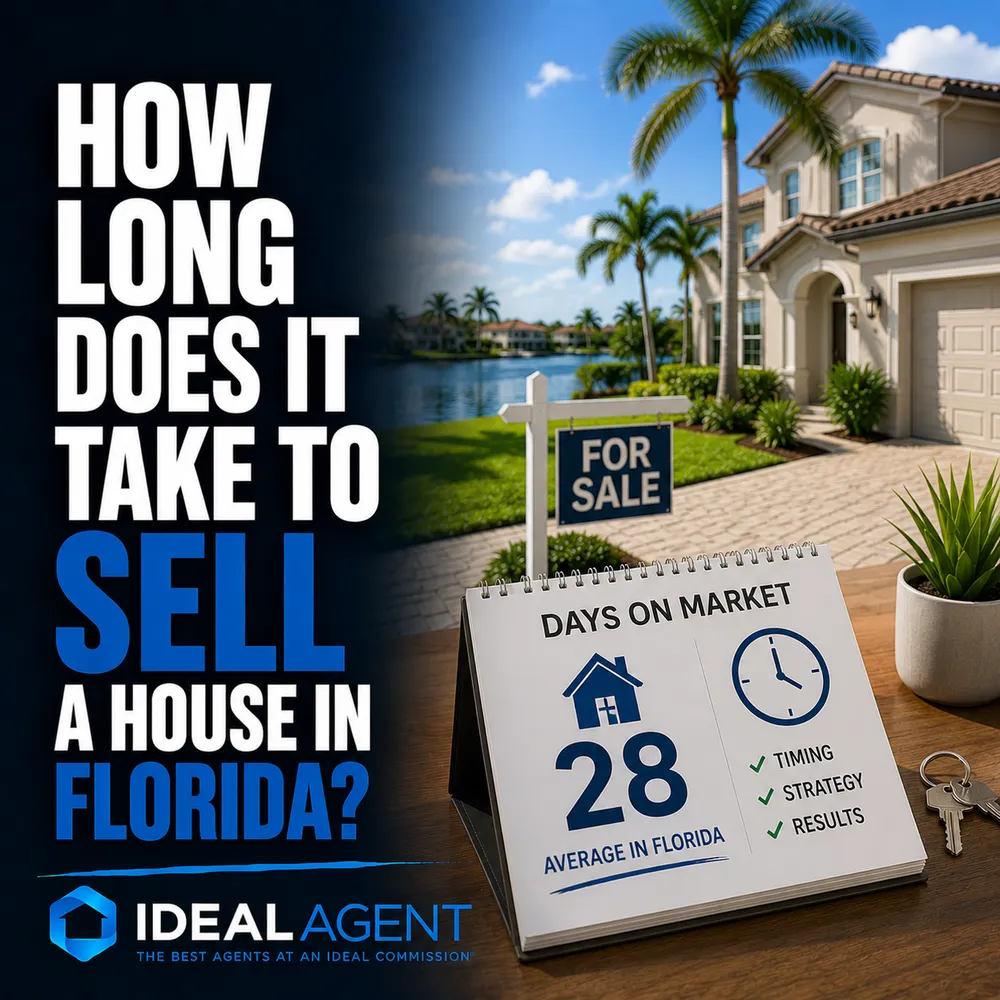
Florida sellers often underestimate how long the full sales process takes — from the decision to list to the day proceeds hit their account. That gap can be 60 days in a fast market or 150+ days when pricing or condition problems add friction. Knowing what to expect, and what you can control, helps you plan your move and manage carrying costs.
Short answer: In 2026, Florida homes that are priced correctly and in good condition typically go under contract within 30–60 days of listing. Add 30–45 days for the closing process, and the average total timeline is 60–105 days from list date to close. Overpriced homes or those with condition/insurance complications can take significantly longer.
Florida Average Days on Market by Region (2026)
Days on market (DOM) measures how long a home sits on the market before going under contract. These are current estimates for well-priced, move-in ready homes:
| Florida Market | Average Days on Market (2026) |
|---|---|
| Jacksonville | 35–55 days |
| Tampa Bay area | 40–65 days |
| Orlando metro | 35–55 days |
| Miami-Fort Lauderdale | 45–75 days |
| Palm Beach County | 50–80 days |
| Sarasota / Manatee | 50–80 days |
| Fort Myers / Naples | 60–90 days |
| Florida Panhandle | 45–70 days |
These are averages for the overall market. Well-priced homes with strong presentation can sell in 7–21 days in most Florida markets. Overpriced homes can sit for 90–180+ days before eventually selling at a reduced price.
The Full Florida Selling Timeline
Phase 1: Pre-Listing Preparation (1–4 Weeks)
Before the home hits the market, sellers should complete:
- Agent selection and listing agreement signing
- Pricing strategy development (CMA and market analysis)
- Pre-listing inspection (recommended)
- Repairs, cleaning, and staging
- Professional photography
- Disclosure preparation (Florida requires specific disclosures including flood zone status, HOA information, and known material defects)
Florida-specific disclosures add a step many out-of-state sellers don’t anticipate. Your agent will guide you through the required forms, but allow time for this process.
Phase 2: Active on Market (30–75 Days Average)
This phase ends when you accept an offer. The length depends primarily on pricing accuracy and market conditions in your specific submarket.
Florida factors that affect time on market:
Roof age: A roof older than 15 years generates immediate buyer concern in Florida because insurers may refuse coverage. If your roof is aging, buyers will factor in replacement cost, which compresses offers. Homes with newer roofs or documented wind mitigation often sell faster and for more.
Flood zone status: Homes in FEMA Special Flood Hazard Areas (SFHA — Zones AE, VE) face additional buyer scrutiny because of mandatory flood insurance requirements. This reduces the buyer pool, particularly at lower price points where flood insurance adds significant carrying cost.
HOA and condo association health: Buyers and their lenders scrutinize HOA financials, reserve fund adequacy, and pending special assessments. Florida’s post-Surfside legislation (SB 4D) now requires reserve fund studies for condo buildings — buildings with underfunded reserves may be difficult to finance, extending your selling timeline.
Seasonal demand: Florida’s peak buyer season runs February through May. Listing during this window typically compresses time on market. Listing in September–November (peak hurricane season) often extends it.
Phase 3: Under Contract to Close (30–50 Days)
Once you accept an offer, the closing process begins. In Florida, this typically includes:
- Home inspection: Scheduled within 7–10 days of contract. Florida home inspections often include separate roof inspection, wind mitigation inspection, and 4-point inspection (required by many insurers for older homes)
- Appraisal: Ordered by buyer’s lender, completed within 10–21 days
- Title search and title insurance: Completed by title company; typically 2–3 weeks
- Loan underwriting: Final approval typically requires 21–35 days
- Final walkthrough: 24–48 hours before closing
- Closing: Typically held at a title company in Florida (not at the attorney’s office, as in many other states)
Florida cash closings can occur in as few as 14–21 days from contract acceptance, which is one reason Florida’s strong cash buyer market — retirees, investors, and second-home buyers — is valuable to sellers.
Florida-Specific Factors That Slow Down Sales
Roof Age and Insurance Complications
This is the #1 cause of unexpected delays in Florida sales. When a buyer’s insurance company refuses to bind coverage on a home with an older roof, the buyer cannot close without either:
- Finding an alternative insurer (increasingly difficult in Florida)
- The seller replacing the roof before closing
- The buyer paying cash and accepting the insurance challenge
If you haven’t addressed roof age before listing, expect this to surface at the worst possible moment — after you’ve accepted an offer and both sides have invested time and money.
Condo Association Review and Approval
Many Florida condo associations require buyer approval — including background checks, financial reviews, and formal approval votes. This process can take 30–60 additional days on top of standard closing timelines. Sellers in condo communities should factor this into their expected timeline.
Flood Zone Issues and Elevation Certificates
If your property is in or near a flood zone, buyers’ lenders will require an elevation certificate to determine the appropriate flood insurance premium. If you don’t have one, it must be obtained from a licensed surveyor — a process that can take 2–4 weeks.
HOA Estoppel Delays
Florida law requires HOA estoppel letters to close. These letters confirm the status of dues, assessments, and any violations. Some HOA management companies are slow to produce them — allow 10–14 days for the estoppel process, and factor in the HOA’s responsiveness when estimating your closing timeline.
What Florida Sellers Can Do to Sell Faster
Address the roof before listing. A new roof or documented recent repairs with wind mitigation certification eliminates the #1 delay factor in Florida sales. It’s expensive ($10,000–$20,000+) but can compress your timeline significantly and support a higher sale price.
Obtain an elevation certificate if applicable. Having this document available for buyers eliminates a potential 2–4 week delay in the closing process.
Request your HOA financials and estoppel in advance. Know your HOA’s reserve fund status, any pending assessments, and whether the building is on the approved lender list before listing. Surprises here kill deals.
Price accurately from day one. This is the single most powerful accelerator. A well-priced home in Florida in 2026 can go under contract in 7–21 days. An overpriced home may sit for months.
Work with a top local agent. An agent who actively sells in your market knows how to position and market your home to generate immediate interest — not just wait for MLS traffic.
IDEAL AGENT matches Florida sellers with top 1% local agents who know the specific inventory levels, buyer demand, and negotiation dynamics of your market. At a 2% listing commission — well below the traditional 2.5–3% — you keep more of your equity while receiving the high-performance representation that compresses your timeline. If a buyer comes directly through your agent’s marketing with no separate buyer’s agent, total commission is just 2%. When a buyer’s agent is involved, IDEAL AGENT recommends a competitive 2–2.5% buyer’s agent commission.
Frequently Asked Questions
How long does it take to close on a house in Florida?
Once you’re under contract, closing in Florida typically takes 30–45 days with conventional financing, 45–60 days with FHA or VA loans, and 14–21 days with a cash buyer. Title work, inspections, appraisals, and lender underwriting all run concurrently but the slowest element determines your close date.
What month do homes sell fastest in Florida?
February through April are the fastest months for Florida home sales. This is the peak of the “snowbird” season when northern buyers are in Florida making purchase decisions. Well-priced homes listed in February or March frequently go under contract within the first two weeks.
Does a 4-point inspection slow down a Florida sale?
A 4-point inspection (reviewing roof, electrical, plumbing, and HVAC) is required by many Florida insurance companies before binding a homeowner’s policy on homes older than 25–30 years. It doesn’t slow the sale if completed early — but if a buyer’s insurer requires one and it reveals problems, it can cause delays or renegotiation.
Why do Florida homes sometimes take longer to sell than in other states?
The Florida market has unique complications — insurance availability and cost, flood zone exposure, condo association requirements, and seasonal demand patterns — that don’t affect most other states as significantly. These factors create additional steps in the buyer’s due diligence and financing process that extend timelines.
How does the condo crisis affect selling timelines in Florida?
Since Florida’s post-Surfside legislation, many older condo buildings face reserve funding requirements and special assessments that affect their eligibility for Fannie Mae/Freddie Mac financing. If your condo building loses its “warrantable” status, your buyer pool is restricted to cash buyers — which reduces competition and can extend your time on market significantly.
Knowing what affects your timeline — and addressing those factors before you list — is the difference between a fast, smooth sale and months of uncertainty. Get matched with a top local Florida agent through IDEAL AGENT and list at a pre-negotiated 2% commission. Start today.