Home Appraisal Guide: What It Is and How It Affects Your Sale
-
 Research Team
 - 06 May, 2026
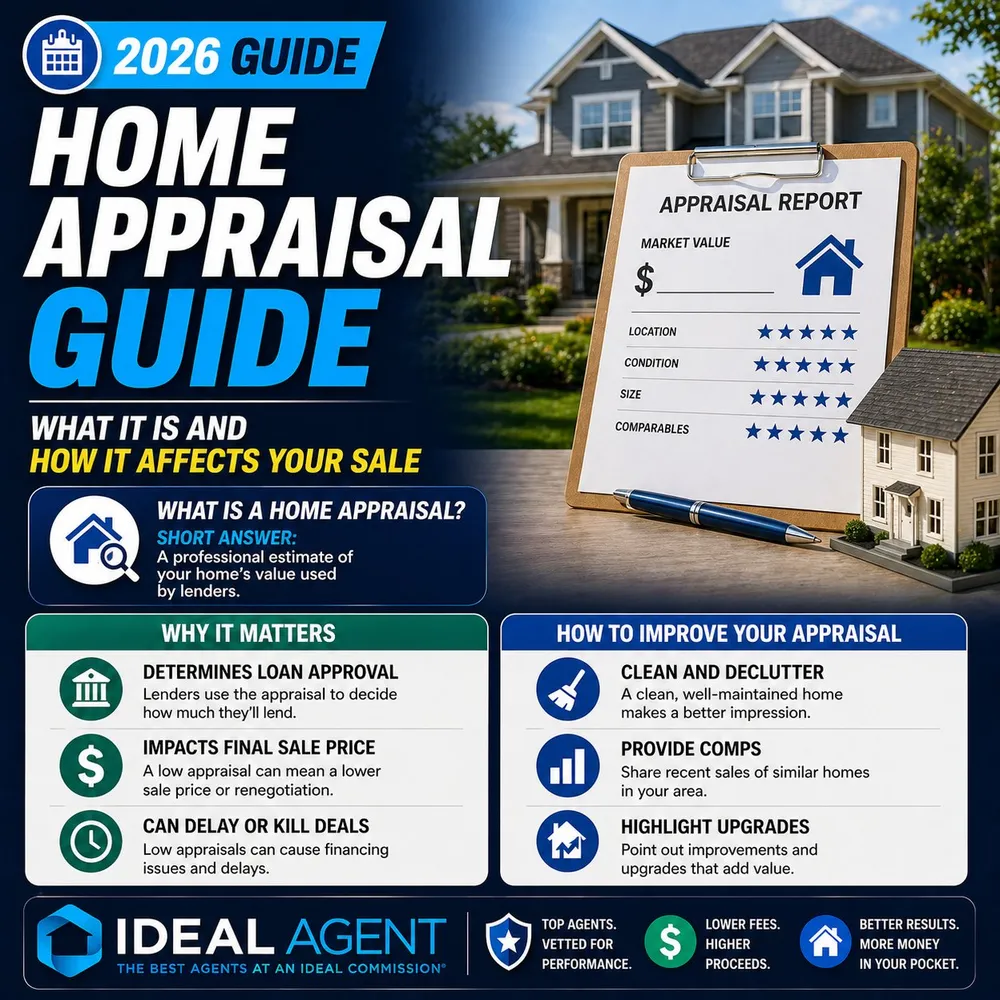
For most home sales, the appraisal is the moment where everything that’s been agreed to gets validated — or doesn’t. If the appraised value supports your sale price, you close on schedule. If it doesn’t, you’re negotiating again. Understanding how appraisals work — and how to prepare for them — can prevent one of the most common sources of late-stage deal complications.
What Is a Home Appraisal?
Short answer: A home appraisal is a licensed appraiser’s professional opinion of your home’s market value, conducted on behalf of the buyer’s lender to confirm the property is worth what the lender is being asked to finance. It is not the same as the sale price you’ve agreed to — and when those numbers don’t match, the transaction is at risk.
Why Home Appraisals Happen
When a buyer uses a mortgage to purchase your home, their lender is funding most of the transaction. The lender needs assurance that the property — which serves as collateral for the loan — is worth the amount being borrowed.
The appraisal is how they get that assurance. An independent, licensed appraiser visits the property, evaluates it against recent comparable sales, and produces a formal value opinion. If the appraisal supports the purchase price, the lender proceeds. If it doesn’t, the lender won’t fund the full amount — and the transaction needs to be renegotiated or terminated.
Who orders it: The buyer’s lender Who pays for it: The buyer (typically $400–$700, paid at or before closing) Who it protects: The lender — not the buyer or seller When it happens: After the offer is accepted, during the contingency period (typically within 2–3 weeks of contract)
How the Appraisal Process Works
Step 1: The lender orders the appraisal. After the purchase contract is executed and the buyer’s loan application is in process, the lender selects a licensed appraiser from their approved panel (often through an Appraisal Management Company to maintain independence).
Step 2: The appraiser visits the property. The appraiser schedules a visit, typically 30–60 minutes, to assess the home’s condition, size, features, and quality. They measure square footage, note the condition of major systems and the roof, photograph the interior and exterior, and assess any upgrades or deficiencies.
Step 3: The appraiser selects comparable sales. The core of the appraisal is a comparison to recently sold homes (“comps”) with similar characteristics — ideally within the same neighborhood, similar square footage, similar bedroom/bathroom count, and sold within the last 90 days. The appraiser adjusts the comp values up or down based on differences between those properties and yours.
Step 4: The appraiser produces a value opinion. Based on the comparable sales analysis and the property condition assessment, the appraiser issues a formal appraisal report with a single value conclusion. This is the number the lender uses.
Step 5: The lender receives the report. The buyer’s lender reviews the appraisal. If the value supports the purchase price, the loan proceeds. If it doesn’t, the lender will only finance up to the appraised value — not the agreed purchase price.
What Appraisers Look At
Comparable sales (primary driver): The most heavily weighted factor. Appraisers look for homes that have sold within 90 days, within a half-mile radius (or the same neighborhood), with similar square footage, bedroom/bathroom count, age, and condition.
Property condition: The appraiser notes the condition of the roof, HVAC systems, plumbing, electrical, foundation, and interior/exterior condition. Significant deficiencies can reduce value or, in the case of FHA/VA loans, require repairs before closing.
Square footage: Measured by the appraiser — not taken from tax records or listing information. Discrepancies between listed and appraised square footage can affect value.
Location factors: Proximity to desirable amenities, school quality, noise exposure, and lot characteristics all factor in.
Upgrades and improvements: Recent kitchen renovations, bathroom updates, new roof, new HVAC, and similar improvements are noted and may add value — but typically not dollar-for-dollar. An appraiser applies a market-derived adjustment, not replacement cost.
When an Appraisal Comes in Low
A low appraisal — where the appraised value is below the agreed purchase price — is one of the most stressful events in a real estate transaction. Here’s exactly what happens and what your options are:
The lender will only fund up to the appraised value. If the purchase price is $400,000 and the appraisal comes in at $385,000, the lender bases the loan on $385,000. The buyer would need to either cover the $15,000 gap in cash or the parties need to renegotiate.
Your options as a seller:
-
Reduce the price to the appraised value. The cleanest resolution. The buyer gets a loan that works; you close. You receive less than agreed.
-
Negotiate a split. Buyer and seller meet somewhere between the appraised value and the original purchase price. The buyer covers part of the gap in cash; the seller accepts a modest price reduction.
-
Challenge the appraisal. Your agent can submit a “reconsideration of value” with additional comparable sales that the appraiser may have missed or underweighted. This succeeds sometimes — particularly if the market has been moving quickly and the appraiser used older comps.
-
Walk away. If the buyer has an appraisal contingency (most do), they can terminate the contract if the appraisal doesn’t support the price and the parties can’t reach agreement.
Prevention is better than resolution. The best way to handle a low appraisal is to avoid one — by pricing correctly from the start, based on defensible comparable sales that an appraiser will also use.
How to Prepare Your Home for an Appraisal
While appraisers are trained to be objective, presentation and information quality can influence their assessment at the margins. Here’s how to set your home up well:
Provide documentation of improvements. Prepare a list of significant upgrades with approximate dates and costs: roof replacement, HVAC replacement, kitchen renovation, new windows, etc. Give this to your agent to share with the appraiser at the time of visit.
Clean and declutter. While appraisers aren’t staging consultants, a clean, organized home signals care and maintenance — and makes it easier to assess condition accurately.
Make minor repairs visible. Fix dripping faucets, broken handrails, chipped paint, and other easily correctable items before the appraisal. These signal deferred maintenance and can affect condition rating.
Provide access to all areas. The appraiser needs to access the attic, basement, crawl space, garage, and all rooms. Make sure all areas are accessible and clear enough to inspect safely.
Share comparable sales with your agent. Ask your listing agent to compile 3–5 recent comparable sales that support your price — ideally homes that sold within 90 days and are similar to yours. Your agent can share these with the appraiser before or during the visit. Appraisers are required to consider this information.
Be available but not present. It’s not necessary for you to be home during the appraisal, but make sure your agent or a representative is available to provide access and answer questions.
Appraisals and Different Loan Types
Conventional loans: Standard appraisal process. The lender uses the appraised value to set the maximum loan amount.
FHA loans: Stricter property condition requirements. The FHA appraiser will flag health and safety issues (chipping lead paint, missing handrails, inoperative systems, roof with less than 2 years of life remaining) that may require repair before closing. FHA appraisals also stay with the property for 120 days — meaning a second FHA buyer within that window uses the same appraisal.
VA loans: Similar to FHA in that the VA appraiser applies minimum property requirements (MPRs). Veterans using VA financing often need sellers to address condition issues that conventional buyers’ appraisals would note but not require.
Cash purchases: No appraisal required by the lender (there is no lender). Cash buyers may choose to get an independent appraisal for their own protection, but it’s not mandatory — and many cash investors specifically skip it.
Frequently Asked Questions
What happens if the home doesn’t appraise?
If the appraised value comes in below the purchase price, the lender will only finance up to the appraised value. The buyer, seller, or both need to adjust. Options include reducing the price, negotiating a split, challenging the appraisal with additional comps, or terminating the contract (if the buyer has an appraisal contingency).
Can a seller refuse an appraisal?
The seller can refuse to allow the appraiser access, but doing so typically triggers contract termination rights for the buyer. In practice, refusing an appraisal kills the deal. Sellers don’t have control over the appraisal outcome — only over how they prepare and present the home.
How long does a home appraisal take?
The in-person visit typically takes 30–60 minutes for an average home. The appraiser then takes 2–7 business days to complete the written report. The full appraisal process from order to report delivery typically takes 1–2 weeks.
How much does a home appraisal cost?
The buyer pays for the appraisal, typically $400–$700 for a single-family home. Complex properties, rural locations, or markets with limited appraisers may cost more. The appraisal fee is generally non-refundable — the buyer pays for the service whether or not the deal closes.
Can a seller get their own appraisal before listing?
Yes — a pre-listing appraisal is an option, though less common. It typically costs $400–$600 and gives the seller a professional value opinion before setting a list price. It can be useful for unique or hard-to-comp properties where pricing is uncertain. However, lenders will still order their own appraisal for the buyer’s financing — the seller’s appraisal doesn’t substitute for the lender’s.
Selling your home and want to price it at a level that supports a clean appraisal? IDEAL AGENT matches you with a top 1% local agent who will price your home with comparable data that stands up to any appraiser’s review. Get started free today.