The Hidden Cost of a Slow Listing Agent Response Time
-
 Steve Johnston
 - 11 Sep, 2026
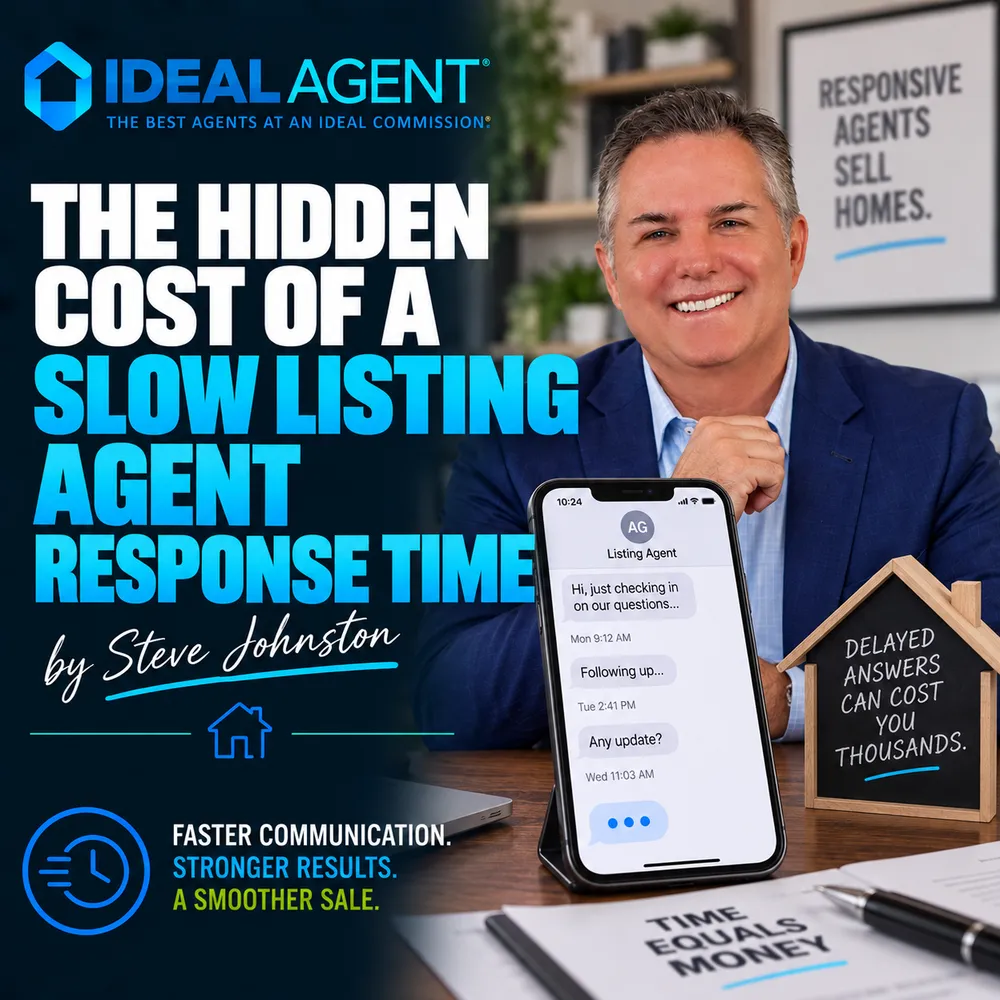
I’ve watched a lot of home sales unravel slowly, one delayed response at a time, and I want to be direct about something the industry doesn’t talk about enough: a slow-responding agent isn’t just a minor annoyance. It’s a genuine, measurable cost to your bottom line, and most sellers don’t realize how much it’s actually costing them until the sale is already behind schedule or a buyer has moved on entirely.
Short answer: A listing agent who responds slowly to showing requests, buyer inquiries, offer negotiations, or urgent transaction issues can cost you real opportunities — missed showings from time-sensitive buyers, weaker negotiating position during multiple-offer situations, and delayed responses during contingency periods that put your closing timeline at risk. Response time isn’t a soft, secondary quality in an agent — it directly affects your financial outcome.
Why Does Response Time Matter More Than Sellers Realize?
Real estate moves on other people’s schedules as much as yours — a buyer’s agent trying to schedule a showing, a title company needing a document signed, a buyer’s lender requesting information during underwriting. Every one of these moments has a window of opportunity, and a slow response doesn’t just delay things politely — it can mean a showing request goes to a competing, easier-to-book listing instead, or a time-sensitive negotiation point gets resolved less favorably because your agent wasn’t available to advocate for you in the moment.
How Does Slow Response Time Actually Cost You Showings?
Buyer’s agents managing multiple client showings in a single day often have limited flexibility in their schedule, and if your agent takes hours or days to confirm a showing request, some of those buyers simply move on to other available listings rather than waiting. This is invisible to you as the seller — you don’t see the showing that never happened because your agent was slow to respond. You just see lower overall showing activity than your home should be generating, without necessarily understanding why.
What Happens During a Multiple-Offer Situation With a Slow Agent?
Multiple-offer situations often move quickly, with buyer’s agents needing timely answers about deadlines, competing offer details (within what’s legally and ethically appropriate to share), and your responsiveness to counteroffers. An agent who’s slow to communicate during this window can cause serious, motivated buyers to lose confidence in the process or simply run out of patience, potentially costing you a stronger offer that walked away because the process felt disorganized or unresponsive.
How Does This Play Out During Inspection and Financing Negotiations?
Inspection and financing contingencies operate on defined, often tight deadlines. An agent who’s slow to respond to a repair request, slow to communicate your counteroffer, or slow to follow up on financing milestones can push a transaction right up against — or past — contractual deadlines, creating unnecessary risk or requiring last-minute extensions that put both sides in an uncomfortable position. I’ve seen deals nearly fall apart not because of a genuine disagreement between buyer and seller, but because of an agent who simply wasn’t responsive enough to keep the process moving on schedule.
Does Response Time Affect How Buyers Perceive Your Home?
Yes, indirectly but meaningfully. A buyer’s agent who has a frustrating, slow experience trying to get information about your listing may form an impression that carries over into how they present the home to their own client — a subtle but real effect on how enthusiastically your home gets represented on the other side of the transaction. Buyer’s agents talk to each other too, and an agent known for being unresponsive can develop a local reputation that affects how eagerly other agents want to work with them on behalf of their buyers.
What Should You Ask About Response Time Before Hiring an Agent?
Ask directly what their typical response time is for buyer inquiries and showing requests. Ask how they handle communication during active negotiations — will you be updated promptly, or find out about developments after they’ve already been decided. And ask how many active listings and clients they’re currently juggling, since an agent stretched too thin across too many transactions is more likely to have delayed response times regardless of their intentions.
Is a Busy Agent Automatically a Slow Agent?
Not necessarily — some highly successful agents manage a significant volume of business while still maintaining strong responsiveness, often because they’ve built systems, support staff, or technology specifically to prevent volume from translating into slow communication. But it’s a fair question to ask directly: how do they ensure responsiveness even when they’re managing multiple transactions simultaneously? An agent with a thoughtful, specific answer to this question is a better sign than one who simply promises to “always be available” without explaining how.
How Should You Evaluate This During Your Agent Interview?
Pay attention to how quickly a prospective agent themselves responds to your own initial inquiries and follow-up questions during the hiring process. This is often a genuine preview of what your experience will be like once you’re actually under contract with them — an agent who’s slow to respond before you’ve even hired them is unlikely to suddenly become significantly more responsive afterward.
Why Did Responsiveness Become a Core Part of How I Built IDEAL AGENT’s Vetting?
After 25 years watching deals get quietly damaged by slow communication, I made sure this wasn’t an afterthought in how IDEAL AGENT evaluates and matches agents. We specifically vet for agents who combine strong transaction volume with genuine responsiveness — not agents so overloaded that sellers become an afterthought. That agent lists your home for a firm 2% commission, well below the 2.5–3% many sellers pay with a traditional agent. The recommended buyer’s agent commission is 2%–2.5%, and if a buyer comes directly through that agent’s marketing of your home, your total commission is capped at 2% combined for both sides — top-tier performance and responsiveness, without the traditional commission cost.
Frequently Asked Questions
What’s a reasonable response time to expect from a listing agent?
While there’s no single universal standard, buyer inquiries and showing requests should generally be addressed within hours, not days, particularly during active listing periods and negotiations.
How can I tell if an agent is too busy to be responsive before I hire them?
Ask directly how many active clients and listings they’re currently managing, and pay attention to how quickly they respond to your own questions during the hiring process itself.
Does a slow-responding agent affect my sale price, or just convenience?
It can genuinely affect your sale price and outcome — missed showings, weaker negotiating position during multiple offers, and rushed decisions near contingency deadlines all have real financial consequences.
Should I switch agents if I’m experiencing slow response times mid-listing?
This is worth a direct conversation first about expectations and reasons for the delay, though if the pattern continues and is genuinely affecting your sale, you may have options depending on your specific listing agreement terms.
Do larger brokerages have better response times than smaller, independent agents?
Not necessarily — response time is more about the individual agent’s systems, support, and current workload than the size of their brokerage.
Can an agent be both high-volume and highly responsive?
Yes, particularly agents who’ve built strong systems, support staff, or technology specifically to maintain responsiveness even while managing significant transaction volume.
What’s the best way to evaluate responsiveness before signing a listing agreement?
Pay close attention to your own experience during the interview and hiring process — an agent’s responsiveness to you before you’ve hired them is a strong preview of what to expect afterward.
Choosing a responsive agent protects real money, not just your peace of mind. Get matched with a top 1% local agent vetted for both performance and responsiveness, listing for 2% commission.