Co-Op vs. Condo: How Selling Differs in Each
-
 Research Team
- 20 Oct, 2026
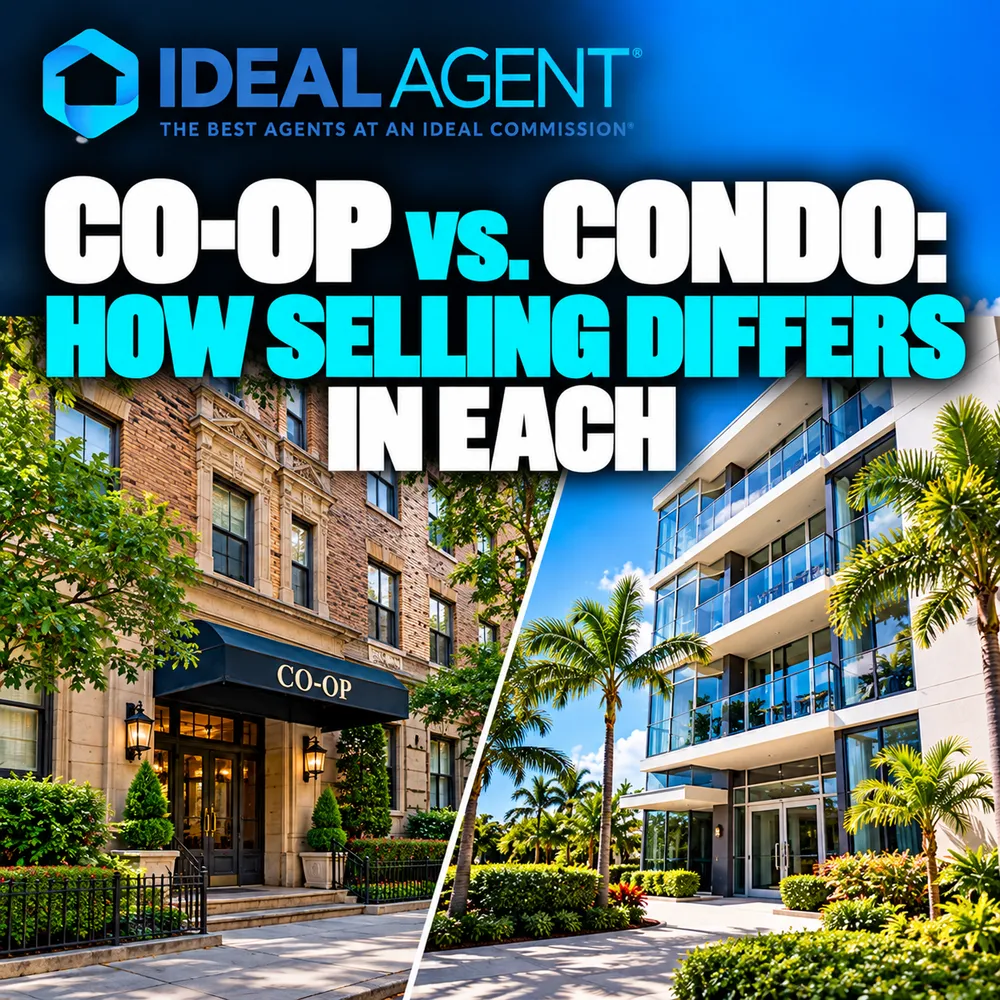
Co-ops and condos both involve shared buildings, so they’re often lumped together, but selling one is quite different from selling the other. The legal structure drives everything from who approves your buyer to how long the sale takes, and sellers who assume the two work the same often run into surprises.
Short answer: In a condo, you own your unit as real property and sell it by deed, usually with limited association approval. In a co-op, you own shares in a corporation and have a proprietary lease to your unit, and buyers typically must be approved by the co-op board after submitting detailed financial information. Co-op sales generally take longer, involve extra fees such as flip taxes in some buildings, and have a narrower set of financing options. Confirm the specifics with your building and an attorney.
What Is the Basic Difference in Ownership?
A condo owner holds title to a specific unit plus an interest in the common areas, and the unit is real property with a deed. A co-op owner holds shares in a corporation that owns the building, and those shares come with a proprietary lease giving the right to occupy a particular unit. This structural difference is why the sale process, approval, and financing differ.
Who Approves the Buyer?
In many condos, the association doesn’t approve buyers at all, or its role is limited, though some have approval rules or a right of first refusal. In a co-op, the board typically reviews the buyer’s application, including income, assets, credit, and references, and often holds an interview. The board can generally reject a buyer, and its decision-making can be stricter than a lender’s. That extra step affects timing and your buyer pool.
How Does the Co-op Board Package Work?
Buyers submit a package that commonly includes financial statements, tax returns, employment verification, bank statements, references, and a completed application, along with the purchase contract. The board reviews it, which can take weeks, and some boards require an interview. Sellers often help by providing building information and responding quickly to requests, since delays can cost you a buyer.
What Extra Costs Can Co-op Sellers Face?
Some co-ops charge a flip tax or transfer fee when a unit is sold, calculated in various ways, such as a percentage of the price or a per-share amount. There may be application, move-in, and managing agent fees. Condos can have transfer or resale-certificate fees too, but flip taxes are more closely associated with co-ops. Ask your building what applies so you can build it into your net.
| Condo | Co-op | |
|---|---|---|
| What you own | Unit as real property, with deed | Shares plus a proprietary lease |
| Buyer approval | Often limited | Board approval is typical |
| Financing | Standard mortgages, subject to project review | Share loans, with fewer lenders |
| Extra costs | Resale certificate and transfer fees may apply | Flip tax and board package fees are common |
| Timeline | Usually faster | Often longer |
How Does Financing Differ?
Condo buyers typically use mortgage loans secured by the unit. Co-op buyers usually use share loans, secured by the shares and lease rather than real property, and fewer lenders offer them. Many co-ops also require a minimum down payment or limit how much a buyer can finance. This narrows the pool of buyers who can qualify, which is part of why co-ops can take longer to sell.
Does the Building’s Finances Matter?
Yes for both. In a co-op, the building typically has an underlying mortgage, and buyers and lenders look at its finances, reserves, and the financial statements of the corporation. In a condo, lenders look at the association’s reserves, assessments, and owner delinquencies. Healthy finances support a smoother sale in either structure.
How Long Does a Co-op or Condo Sale Usually Take?
There’s no fixed timeline, but co-op sales commonly take longer than condo sales because of board review, the board package, and fewer financing options. Condo timelines are more likely to be driven by association document turnaround and any lender review of the building. Ask your management company how long approvals typically take and build that into your move plans, so you aren’t surprised by delays after you’ve accepted an offer.
How Should You Price a Co-op Versus a Condo?
Compare with similar units in the same type of building. Because co-ops often have a narrower buyer pool and different costs, prices are often compared separately from condos, and monthly maintenance charges, which can include taxes and building costs, matter greatly to buyers. Make sure your listing explains what the monthly charge includes.
What Should You Do Before Listing?
Learn your building’s process: ask the management company or board for the sale requirements, fee schedule, and timeline. Gather the documents buyers will need, such as the proprietary lease and financial statements for co-ops or the declaration and resale certificate for condos. Talk with an agent who regularly handles your building type.
How Does Commission Affect Your Net?
With transfer fees and closing costs, commission is one of the largest controllable items.
| Traditional agent | IDEAL AGENT | You save | |
|---|---|---|---|
| Listing commission | 3% | 2% | 1% |
| Buyer’s agent commission | 3% | 2% | 1% |
| Total (if buyer has an agent) | 6% | 4% | 2% |
If a buyer comes directly through your agent’s own marketing, with no separate buyer’s agent, your total commission is capped at just 2% combined. IDEAL AGENT matches sellers with a top 1% local agent experienced in your local building types, at a 2% listing commission and a recommended 2-2.5% buyer’s agent commission.
Frequently Asked Questions
What is the main difference between a co-op and a condo?
In a condo you own your unit as real property. In a co-op you own shares in a corporation with a proprietary lease.
Can a co-op board reject my buyer?
Typically yes, based on its own standards, which is why the board package matters.
What is a flip tax?
A fee charged by some co-ops when a unit is sold, calculated according to the building’s rules.
Why do co-ops take longer to sell?
Board review, fewer financing options, and extra paperwork usually add time.
Is financing harder for a co-op?
Often, because share loans are offered by fewer lenders and boards may set down payment minimums.
Do condos require board approval?
Some do or have a right of first refusal, but many are less restrictive than co-ops.
Who can tell me my building’s requirements?
The management company or board, along with an agent who regularly sells in your building.
Knowing your building’s rules before you list prevents delays at the worst moment. Get matched with a top 1% local agent experienced with your building type, listing for 2% commission.