How a Buyer's Financing Contingency Can Delay (or Kill) Your Sale
-
 Research Team
 - 05 Sep, 2026
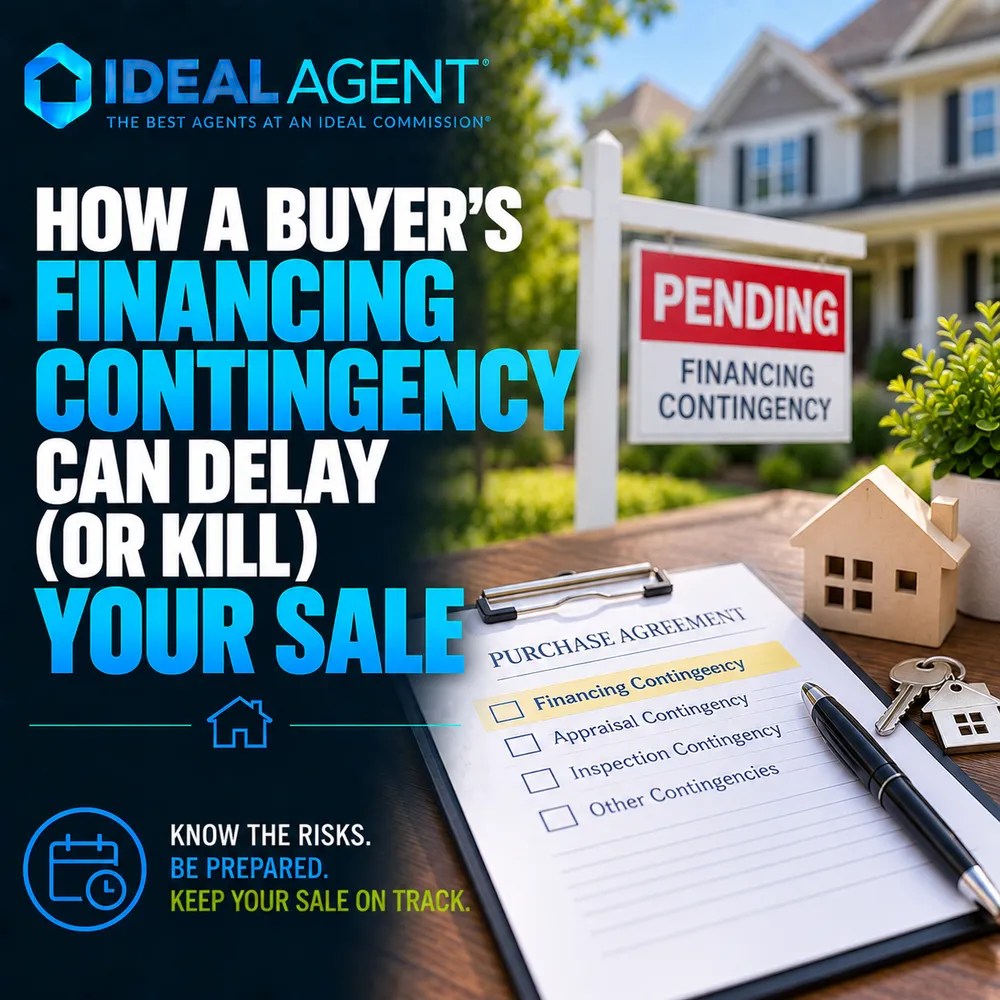
An accepted offer feels like the finish line, but if your buyer is financing their purchase, the deal isn’t actually secure until their loan clears every step of underwriting. Understanding what can go wrong between contract and closing — and how to protect yourself against it — separates sellers who navigate this smoothly from those blindsided by a deal falling apart weeks in.
Short answer: A financing contingency gives the buyer a defined period to secure mortgage approval, and if their financing falls through for a covered reason within that window, they can typically cancel the contract and recover their earnest money. This means your sale isn’t fully secure until the buyer’s loan clears final underwriting — verifying your buyer’s pre-approval strength upfront and monitoring the loan process are two of the most effective ways to protect yourself.
What Does a Financing Contingency Actually Protect the Buyer From?
This contingency exists because a mortgage pre-approval, issued before a specific property and full underwriting review, isn’t a guarantee of final loan approval. Between contract acceptance and closing, the lender conducts full underwriting — verifying income, assets, credit, and the property’s appraised value — and if something in that process doesn’t meet the loan program’s requirements, the buyer’s financing can fall through despite an earlier pre-approval. The financing contingency allows the buyer to exit the contract without forfeiting their earnest money if this happens within the specified contingency period.
What Can Actually Cause a Buyer’s Financing to Fall Through?
Common causes include a change in the buyer’s financial situation between pre-approval and closing (a new debt, a job change, reduced income), the property appraising for less than the purchase price, creating a financing gap, issues discovered during underwriting that weren’t apparent during pre-approval (undisclosed debts, credit issues, documentation problems), or changes in loan program requirements or interest rates that affect the buyer’s qualification. Some of these are within the buyer’s control to avoid; others are more about underlying loan program requirements or market conditions.
How Can You Tell the Difference Between a Strong and a Weak Pre-Approval?
Not all pre-approvals carry equal weight, and understanding this distinction before accepting an offer can meaningfully reduce your risk. A pre-qualification, based on basic self-reported information without documentation review, is generally weaker than a true pre-approval, where the lender has reviewed actual income documentation, credit, and assets. An underwritten pre-approval, where a loan has already gone through preliminary underwriting review before an offer is even made, is generally the strongest form of pre-approval available, since much of the verification work is already complete before your contract is signed.
What Should You Ask About a Buyer’s Financing Before Accepting an Offer?
Your agent should be able to help you evaluate the strength of a buyer’s financing by asking specific questions: what type of pre-approval letter has actually been provided, which lender issued it and whether that lender has a reliable local reputation for closing loans on time, how much of a down payment the buyer is making (larger down payments sometimes indicate stronger overall financial positioning), and whether the buyer’s pre-approval has already accounted for the specific loan program and property type involved.
Does the Length of the Financing Contingency Period Matter?
Yes, meaningfully. A longer financing contingency period gives the buyer more time to secure final approval, which can reduce the risk of a rushed underwriting process causing issues, but it also means your home is effectively off the market and at risk for a longer window before the sale is fully secure. A shorter period moves the transaction toward certainty faster but may pressure the buyer’s lender in ways that occasionally increase the risk of a rushed underwriting mistake. Understanding this tradeoff, and negotiating a period that’s reasonable for your buyer’s specific loan type, is part of a well-structured contract.
What Should You Do If You’re Worried About a Buyer’s Financing?
If you have concerns about a buyer’s financing strength, before or after accepting an offer, your agent can request updates from the buyer’s lender at reasonable intervals, monitor whether key underwriting milestones (like the appraisal) are progressing on schedule, and in some cases negotiate a shorter financing contingency period or additional documentation of pre-approval strength as part of your counteroffer. Staying passively uninvolved and simply waiting to find out at closing whether financing came through leaves you with far less ability to react if problems develop.
What Happens If Financing Falls Through After the Contingency Period Ends?
This depends heavily on your specific contract terms. If the financing contingency period has legitimately expired and the buyer still can’t close due to financing issues, you may have stronger legal standing to retain the earnest money as damages, though this can still involve negotiation or, in disputed cases, legal proceedings depending on the specific circumstances and contract language. This is one more reason understanding your contract’s specific contingency deadlines matters — both to protect your rights and to know exactly where you stand if a financing problem develops.
Should You Consider Backup Offers If Financing Risk Seems Elevated?
In situations where you have some indication of financing risk — a marginal pre-approval, an unusually tight timeline, or a buyer with a complicated financial situation — keeping your listing active for backup offers, where your contract terms allow it, can reduce the disruption if the primary contract does fall through. This is a strategic decision worth discussing directly with your agent based on your specific transaction’s risk level.
Why Does the Right Agent Matter So Much for Managing Financing Risk?
An experienced agent knows what red flags to look for in a buyer’s financing situation before you accept an offer, and how to actively monitor the loan process rather than simply hoping it proceeds smoothly, giving you the best chance to address problems early rather than being surprised by a failed closing.
IDEAL AGENT matches sellers with a top 1% local agent who evaluates buyer financing strength carefully before you accept an offer, and actively monitors the loan process to protect your transaction. That agent lists your home for a firm 2% commission, well below the 2.5–3% many sellers pay with a traditional agent. The recommended buyer’s agent commission is 2%–2.5%, and if a buyer comes directly through that agent’s marketing of your home, your total commission is capped at 2% combined for both sides.
Frequently Asked Questions
Can I keep the earnest money if a buyer’s financing falls through?
This depends on your specific contract terms and whether the financing contingency period had expired — if the buyer cancels within a valid contingency period for a covered reason, they typically recover their earnest money.
Is a pre-approval letter a guarantee of final loan approval?
No — pre-approval is based on preliminary review and can still fall through during full underwriting if new issues arise or the buyer’s situation changes before closing.
How can I tell if a buyer’s financing is strong before accepting their offer?
Ask about the type of pre-approval (pre-qualification versus fully underwritten), the specific lender’s reputation, and the buyer’s down payment amount — your agent can help evaluate these factors.
Does a cash offer eliminate financing risk entirely?
Yes, generally — a genuine cash offer removes financing contingency risk entirely, since there’s no lender approval process required, though proof of funds should still be verified.
What happens if the appraisal comes in low and the buyer can’t cover the gap?
This can trigger a financing contingency issue if the buyer can’t secure approval for the full loan amount needed, potentially leading to renegotiation, an appraisal gap payment from the buyer, or contract cancellation depending on the terms.
Should I accept an offer with a longer financing contingency period if the buyer’s pre-approval seems strong?
This is a judgment call based on the overall strength of the offer — a strong pre-approval can offset some of the risk of a longer contingency period, but this should be evaluated alongside other offer terms.
Can my agent get updates directly from the buyer’s lender during the process?
Often yes, with appropriate authorization, allowing your agent to monitor key milestones and flag potential concerns before they become a surprise at closing.
Protecting your sale from financing risk starts with evaluating buyers carefully before you ever accept an offer. Get matched with a top 1% local agent who evaluates buyer financing strength and protects your transaction, listing for 2% commission.